
Bahía de las Águilas

Calma guide · Pedernales, Dominican Republic

Bahía de las Águilas

The emptiest beach in the Caribbean, and not by accident.

Reviewed · 9 min read

Why here

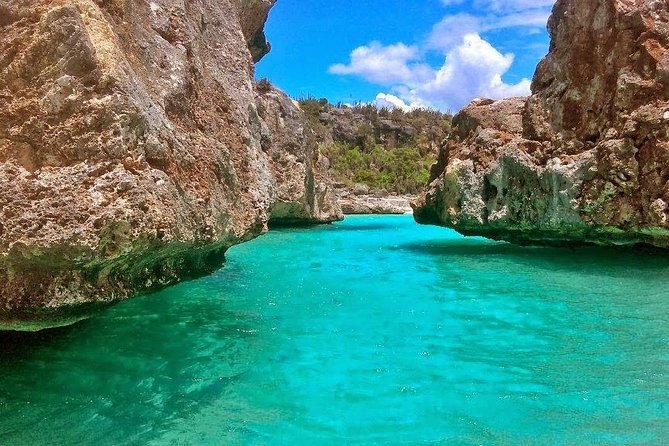
Eight and a half kilometres of coast inside Jaragua National Park, of which roughly five and a half are unbroken white sand. There is no hotel, no beach bar, no umbrella for rent, no rubbish bin. The bay is a half-circle closed off by cliffs with reef in front of it, so the sea arrives with almost no waves: one of the few Caribbean beaches where the water is genuinely still.

It is empty because building there is forbidden, not because nobody has found it. It has been a national park since 1983 and you get there by boat. What is changing is the approach: a few kilometres away, at Cabo Rojo, a tourism zone is under construction with 1,700 rooms planned and a half-built international airport. The beach will stay the same. The way you reach it will not.

It is a five-hour drive from Santo Domingo and right now there is no shortcut: the Cabo Rojo airport does not open until 2027 and Barahona's has no scheduled commercial flights. On the beach there is nothing at all — no water, no food, no toilets, no phone signal, and no shade beyond what the cliffs throw at certain hours. You arrive by boat, you spend four or five hours, you leave by boat. And Pedernales is a border town with simple hotels, one bank, and almost nowhere that takes cards. If what you want is a resort with the beach out front, this is the precise opposite, and Punta Cana is on the other side of the country in every sense.

Language
Spanish. Little English outside the tour operators, and Haitian Creole near the border
Currency
Dominican pesos (DOP). Excursions and glamping are quoted in US dollars.

When to go

December to April

This is the dry season in the southwest, which is also the most arid region in the country: cactus, dry forest and relentless sun. It is when the dirt tracks are in their best shape, when the sea is calmest, and when Laguna de Oviedo holds the most flamingos, because the residents are joined by the ones that come to winter here.

November, with the rains on their way out and hurricane season closing, and the whole coast to yourself before Christmas arrives.

May to November, with hurricane season running June to November. Sources disagree on whether the dry season starts in November or December, so treat November as a transition month. It rains far less here than in the rest of the country, but when it does it matters more than usual: the approaches to the bay and the climb to Hoyo de Pelempito are dirt tracks, and wet they stop being passable without a 4x4.

Season or eventWhenWhat it changes
Holy WeekMarch or April, depending on the yearThe week the entire country goes to the beach. It is when the most boats leave La Cueva and when the bay stops being empty. Everything booked out in Pedernales and along the Barahona coast.
Christmas and New Year20 December to 5 JanuaryDomestic high season, and it lands on the best weather of the year. If you come now, book the boat and the bed well ahead.
The binational marketEvery Monday and FridayNot a festival — it is the economic engine of the province: thousands of traders cross from Haiti and central Pedernales fills from first light. If you are driving on those days, expect traffic.

Midweek and outside high season the bay can be genuinely empty, and that is the version worth the trip. There is also a date on the calendar worth knowing: the first large Cabo Rojo hotel is due in early 2027 and the airport in July of that year. We are not saying it will be worse afterwards. We are saying it will be different, and that right now it still looks the way it has looked for forty years.

Getting there

Flights to Bahía de las Águilas.

Search flights and fares

From

New York

JFK

Duration

4h 00m

From

Miami

MIA

Duration

2h 20m

From

Madrid

MAD

Duration

9h 00m

From

Mexico City

MEX

Duration

3h 30m

Common routes. Airfares change daily, so we do not fix a price here: search for your dates.

Where to stay

Where to stay in Bahía de las Águilas.

See all stays
Consultando disponibilidad real en Bahía de las Águilas

First, choose the neighborhood.

Choose the area before the hotel. In Bahía de las Águilas, it changes the trip substantially.

Cabo Rojo and La Cueva

The fishing settlement the boats leave from, with the national park starting right there. It is all there is: one ranch with a restaurant and glamping tents facing the sea.

For anyone who wants to wake up at the jetty and take the first boat at 8.30am.

Keep in mind: The last ten or fifteen kilometres are unpaved. A normal car manages it carefully, but not after dark.

Pedernales town

The actual town, about twenty minutes away, with the simple hotels, the restaurants and the only bank in the area.

For anyone who would rather pay less, eat out, and have a pharmacy nearby.

Keep in mind: It is a border town and behaves like one: the ATM runs dry, and on Mondays and Fridays the centre seizes up with the market.

The Paraíso coast

The stretch between Barahona and Enriquillo, with the sierra dropping into the sea and river pools at the edge of the sand. This is where the region's small lodging is.

For anyone who wants to break the drive in two and do the bay as one long day trip.

Keep in mind: You are two hours from La Cueva. Making the first boat means leaving in the dark.

Barahona city

The big city of the southwest, with the most hotel supply and the region's only airport, currently without scheduled commercial flights.

For the first night if you are driving from Santo Domingo and would rather not do five hours in one go.

Keep in mind: It is not a beach destination: it is a working city, and the good part starts south of it.

Where to eat

Where to eat in Bahía de las Águilas, and exactly what to order.

Reference prices per person, in Dominican pesos (DOP). Excursions and glamping are quoted in US dollars..

Eating at Cabo Rojo and in Pedernales

A short section, and not out of laziness: there is nowhere to eat at the bay, and Pedernales has very few places with a published menu. We would rather give you two we checked than eight as filler. The most recommended place on the seafront, El Navío, was evicted and partly demolished in May 2026 and is still awaiting relocation, so we are leaving it out until it reopens somewhere fixed.

Rancho Típico Cueva de las Águilas

Cabo Rojo, in the La Cueva settlement

The ranch beside the jetty, at the entrance to Jaragua National Park. It is restaurant, boat operator and glamping all at once, and everyone heading to the bay passes through it.

What to order

The chivo cimarrón, the goat dish of the southwest, and the fish of the day. Rice dishes and the plantain and cassava sides carry the rest of the menu.

Phone: +1 849 245 8774Official website

The honest part: It is the only place to eat for several kilometres and the prices know it. We publish no restaurant hours: what their site confirms is the glamping reception, 8am to 11pm, which is not the same thing.

Restaurante Jalicar

Avenida Libertad 25, Pedernales

A town dining room on the main street, big plates and oilcloth on the tables.

What to order

The fried fish and the lambí al ajillo, garlic conch, which is the shellfish of this coast.

The honest part: The figure people who have eaten there report is around a thousand pesos for three generous plates to share, but there is no published menu: treat it as an order of magnitude, not a price. Cash.

At the bay you do not eat out, you carry it in. There is no stall, no cooler, nobody selling anything, so lunch comes out of your bag and whatever is left leaves with you.

What to do

5 plans, from half a day to a full day.

Bahía de las Águilas

Boats leave from the jetty at La Cueva, in Cabo Rojo. It is fifteen to twenty minutes along the cliff and they drop you on the sand. Departures start at 8.30am and returns run until 5.30pm; four or five hours is the usual stay. The Jaragua National Park entrance fee is paid separately, in cash, at the control post before you board: 150 pesos per person, charged by the Ministry of Environment, and the same amount whether you come in by boat or overland.

Check before leaving: Bring at least three litres of water per person. There is no water, no food, no toilets, no fixed shade, no phone signal and not one rubbish bin: what comes in with you goes out with you.

A full dayTransportation needed

Laguna de Oviedo

The hypersaline lagoon inside the same Jaragua National Park, a good hour from Pedernales. You cross it by yola with the guides of AGUINAOVI, the nature guides association from the village of Oviedo, and this is where the flamingos, roseate spoonbills and iguanas are. Grupo Jaragua publishes the tariffs: from 1,500 pesos for the shoreline walk to 4,000 for the one-hour boat run, up to 5,500 for the long circuit, which adds the southern cays and a stop at Cayo Iguana. You book by phone with the association and no opening hours are published, so you agree them when you book: go first thing, because the birds move once the heat comes up.

Half a morningTransportation needed

Hoyo de Pelempito

An enormous depression in the Sierra de Bahoruco, viewed from a visitor centre on its rim. You climb from Pedernales up a long track and the last seven kilometres are rough. It is genuinely cold at the top: take long sleeves even if that seems absurd when you leave the coast. Come up in a 4x4, and if you have not got one the Oviedo guides run the trip for 2,500 pesos and about four hours. Neither the ministry nor the visitor centre publishes hours or an entrance fee, so arrive early and do not count on finding anyone there.

Half a dayTransportation needed

The Paraíso coast: San Rafael and Los Patos

The two river-and-sea bathing spots on the coast road between Barahona and Enriquillo, and the reason to make the drive slowly. At San Rafael a river comes down off the mountain and forms natural pools a step from the sea. Los Patos is the same thing a few kilometres south, thirty-four from Barahona, and between the two there is a lookout worth stopping at.

Half a dayTransportation needed

Larimar, without going up to the mine

Larimar is a blue stone found only here, in one seam of the Sierra de Bahoruco, and nowhere else on earth. What you can see is the larimar workshop-school and museum in Barahona, where the stone is worked and where it comes from is explained. It publishes no hours: ask at your hotel the day before, because it opens when there is a workshop running.

Check before leaving: Visits to the Las Filipinas mine are suspended on safety grounds, by decision of the ministries of Energy and Mines and of Environment. If someone sells you a tour promising entry to the mine, ask exactly where it takes you before paying.

Half a morningTransportation needed

Getting around

From Santo Domingo, five hours

There is no flight. Cabo Rojo International is under construction and Barahona runs no scheduled commercial service, so today you drive: about 330 kilometres and four and a half to five hours, with the surface getting worse past Barahona. By bus, Caribe Tours covers Santo Domingo to Barahona in around three and a half hours and its line ends there; Barahona to Pedernales is another two hours on local transport. The direct leg is run by ASODUMIPE, the Pedernales transport company, with guaguas from Avenida Teniente Amado García between 6am and 3pm: a plain minibus, five to six hours with stops, but it is the cheap option and the only one without a change.

The boat to the bay

This is the leg with no comfortable alternative. It leaves from the jetty at La Cueva, next to the Rancho Típico, and takes fifteen to twenty minutes. You can book it through the ranch, which sells the crossing from US$15 per person on boats seating up to 28, or negotiate directly with the fishermen in the settlement. There is no published tariff for that: the figures the boatmen's association gave the Dominican press are per boat and by group size, roughly 3,000 pesos for up to five people, 4,500 for up to ten and 5,000 for up to fifteen. Treat it as an order of magnitude and agree it before you get in. Overland access is allowed, on a track that only works in a 4x4 and slowly, and it is the entrance the 150-peso fee at the control post covers. Either way the fee is separate from the boat.

Getting around

A car, ideally with clearance. Between Pedernales, Cabo Rojo, Oviedo and the sierra there is no useful public transport and the distances are long. Inside town, moto-taxis do the job. Fill the tank in Barahona: the last reliable fuel station before Pedernales is at Enriquillo.

What most guides leave out

There is nothing at the bay, and that includes water.

None. No restaurant, no beach bar, no toilets, no showers, no bins, no phone signal. Shade depends on the hour and on where the cliff falls. Bring at least three litres of water per person, food, biodegradable sunscreen and a bag so you leave with everything you came with. This is not brochure environmentalism: there is no collection service, and what stays there stays.

You cannot sleep on the beach, and more is banned than you would guess.

No. It sits inside Jaragua National Park and camping is prohibited, partly because turtles nest there. You also cannot light fires, bring pets, play amplified music, drive on the sand, feed the animals, or take away sand, shells or coral. You sleep at Cabo Rojo or in Pedernales.

Cash, and withdrawn before you arrive.

There is one bank branch in town and its ATM runs out of notes fairly easily, especially at weekends. Cards are barely accepted anywhere. Take pesos out in Barahona or Santo Domingo before you come down, and count on paying the park entrance fee in cash at the control post.

The fuel runs out before the road does.

Fill the tank in Barahona. The last reliable station before Pedernales is at Enriquillo and there are long stretches with nothing in between. Phone coverage behaves similarly: 4G in town, but on the access roads and at many of the places you are going it drops or vanishes.

The airport on the map does not exist yet.

Not yet. Cabo Rojo International has been under construction for years: in May 2026 the runway entered the asphalting phase, and the most recent official projection puts it operational in July 2027. Barahona's María Montez exists and has runway to spare, but runs no scheduled commercial flights. Until further notice you arrive by road from Santo Domingo.

The cruise port is already running, and that changes which days you come.

Yes. The port of Cabo Rojo now takes ships, and it sits twenty kilometres from Pedernales town with a free shuttle into the centre on ship days. It does not change the bay, because the park and the boats are the same as before, but it changes how many people are around and which excursions get sold. The artificial beach built beside the port is not the bay, and we do not list it as a thing to do: it is another thing entirely, next to a construction site.

On Mondays and Fridays Pedernales is a different town.

It is the binational market with Haiti, and it is the economic engine of the province: thousands of traders cross the border and the centre fills from first light. We do not list it as a thing to do, because it is not: it is a working market, on a border whose situation shifts. But it is worth knowing so you do not drive into the middle of it.

If you only have three days

The shortest itinerary that works.

1

Leave Santo Domingo early and do not do the five hours in one push. Past Barahona the road hugs the sea and the good part begins: stop at San Rafael, where the river drops onto the beach, and again at the lookout before Los Patos. Fill up in Barahona and again in Enriquillo. Sleep in Pedernales, or at the ranch in La Cueva if you would rather not set an early alarm.

2

The bay, and give it the whole day. First boat around 8.30am from La Cueva, with the park fee paid in cash at the control post. Three litres of water per person, food, a hat and a bag for your rubbish. Four or five hours of white sand and water without waves, then the boat back in the afternoon. For dinner, the chivo cimarrón at the Rancho Típico or the fried fish at Jalicar, in Pedernales.

3

Change the landscape before you go. If you pick Laguna de Oviedo, leave first thing: flamingos show better early and you cross it by yola with the Oviedo guides. If you would rather have mountains, climb to Hoyo de Pelempito with long sleeves, because it is cold up there. Either one leaves you pointed back towards Barahona for the drive home.