
Centro Histórico
The Palacio, the cathedral and the three museums, all inside ten walkable blocks.
A short first visit, which is how almost everyone comes.
Keep in mind: Noisy by day, empty at night. It is also the area with the most street vending.
Calma guide · Morelos
Ninety minutes from the capital, seventy degrees all year.
Reviewed · 7 min read
Why here
Humboldt is credited with calling it the city of eternal spring, and the nickname has held for two centuries because it is true: Cuernavaca sits at about 70 degrees year-round, at 4,900 feet, on the south slope of the range that separates it from the Valley of Mexico. Warm air climbs from the valley in the morning and cool air comes down from above in the afternoon.
This is the city Mexico City has been escaping to on weekends for a hundred years, and that explains its shape: houses behind high walls with a garden and a pool inside, very little handsome façade and a great deal of courtyard. What you see from the street is not what is behind it.
This is not a monuments destination and it is not a food destination: you see the center in a day and the restaurant list is short. And it has to be said plainly — the state of Morelos appears in the travel advisories of several foreign ministries, the U.S. State Department among them, because of its violence rate. The center by day is an ordinary, calm city, but this is not a town for wandering at night or for taking secondary roads after dark. If that is going to sit badly with you for the whole trip, do not come.
When to go
The dry season leaves the days mild and the nights cool, and from Monday to Thursday the city belongs to the people who live in it. The day of the week matters more than the month, which is the opposite of what most people assume when they plan.
Honestly, any month works. The weather barely moves all year, which is why everyone came here in the first place, Maximilian included.
June through October it rains in the afternoon, in short storms. It does not ruin a trip and it turns the ravines green, but it does rain on garden plans, and here nearly every plan is a garden plan.
| Season or event | When | What it changes |
|---|---|---|
| Weekends | Friday afternoon through Sunday, all year | Not a festival, but it fills the city just the same. Mexico City empties into it, lodging prices jump and there are lines at the restaurants downtown. Midweek is a different city. |
| Semana Santa | March or April, depending on the year | Exactly the reverse of Mexico City: what empties there fills up here. The most expensive and most crowded week of the year. |
| Día de Muertos | October 31 through November 2 | It fills, and Tepoztlán next door fills more. Book ahead. |
The museums close on Mondays. Since the center is a one-day city and that day is a museum day, do not let it land on a Monday.
Getting there
From
Los Angeles
LAX
Airline
Aeroméxico and Volaris
Duration
About 4h 15m
Route
Nonstop to Mexico City, then about 1h 30m by road
From
Dallas
DFW
Airline
American and Aeroméxico
Duration
About 2h 45m
Route
Nonstop to Mexico City, then about 1h 30m by road
From
New York
JFK
Airline
Aeroméxico and Delta
Duration
About 5h 30m
Route
Nonstop to Mexico City, then about 1h 30m by road
From
Madrid
MAD
Airline
Aeroméxico and Iberia
Duration
About 12 hours
Route
Nonstop to Mexico City, then about 1h 30m by road
Common routes. Airfares change daily, so we do not fix a price here: search for your dates.
Where to stay
Choose the area before the hotel. In Cuernavaca, it changes the trip substantially.
The Palacio, the cathedral and the three museums, all inside ten walkable blocks.
A short first visit, which is how almost everyone comes.
Keep in mind: Noisy by day, empty at night. It is also the area with the most street vending.
Residential and shaded, south of the center, with the ethnobotanical garden inside it.
Anyone here to sit still in a garden and go down to the center only once.
Keep in mind: It walks badly to the center. Budget a taxi or a rideshare for every trip.
A long-standing neighborhood to the north, with its basilica and everyday food.
Anyone who would rather have local life than a garden with a pool.
Keep in mind: There is little lodging and almost nothing built for visitors.
The ring of walled houses with gardens and pools that made the city's name. It spreads across Rancho Cortés, Delicias and the northern hills.
The trip that actually makes sense here: not going out. It is what people have come for over a century.
Keep in mind: You need a car or a taxi for everything, and you can see nothing from the street: the house is judged from the inside.
Where to eat
Reference prices per person, in Mexican pesos (MXN).
Everyday Mexican food in a brightly painted house, with papel picado overhead and courtyard tables.
The molletes, which is what the neighborhood comes for, and a café de olla.
Hours: Daily, 8 a.m.–8 p.m.
The honest part: It is outside the center and it is not a postcard: it is where Cuernavaca eats breakfast. On weekends it fills with people down from Mexico City.
The institution here is pozole, and the green pozole of Morelos is unlike the version anywhere else.
A family pozole house with seventy-odd years in Morelos. There is a second location in Bella Vista.
The green pozole, which is the house dish and the reason to make the trip. With sweet chipotle chalupas alongside.
Hours: Daily, 10 a.m.–10 p.m.
The honest part: Some of the accompaniments only come out Thursday through Sunday. Show up on a Tuesday for the patitas and there are none.
The oldest restaurant in the city, open since 1933 in a large old house with a courtyard and a fountain.
The green pozole, out in the courtyard, and in August and September the chiles en nogada, which is when they make sense.
Hours: Daily, 8 a.m.–9 p.m.
The honest part: You come for the courtyard as much as the food, and that is fine. At night the center around it empties out.
Dining room and terraces in an old building, with the best view of the Palacio.
Ask for the balcony and eat looking at the Palacio. The menu mixes Mexican and international; what you remember is the room.
Hours: Not published here. We have not confirmed it.
The honest part: This is the view restaurant, with everything good and bad that carries. Without a terrace table there is not much point.
What to do
The old Palacio de Cortés, closed for seven years after the 2017 earthquake and reopened in March 2023 under a new name. On the east terrace is Diego Rivera's mural on the conquest and the revolution, restored in 2022. Tuesday through Sunday, 9 a.m.–6 p.m., free on Sundays.
The house of an Iowa-born collector who settled here in 1962 and filled a former convent with thirteen hundred pieces: Tamayo, Frida Kahlo, Covarrubias, African and Oceanic art, colonial furniture. It is the best thing in the city and almost nobody has it on their list. Tuesday through Sunday, 10 a.m.–6 p.m. Admission 70 pesos.
The former Casa del Olindo, where Maximilian kept a retreat, now an ethnobotanical garden and INAH museum of traditional medicine. It is the best first-thing-in-the-morning plan in the city. Tuesday through Sunday, 9 a.m.–5 p.m., free entry with a voluntary contribution.
The garden where Maximilian and Carlota spent stretches of time, with its terraces and its pond. Tuesday through Sunday, 10 a.m.–5:30 p.m., admission 30 pesos and free on Sundays.
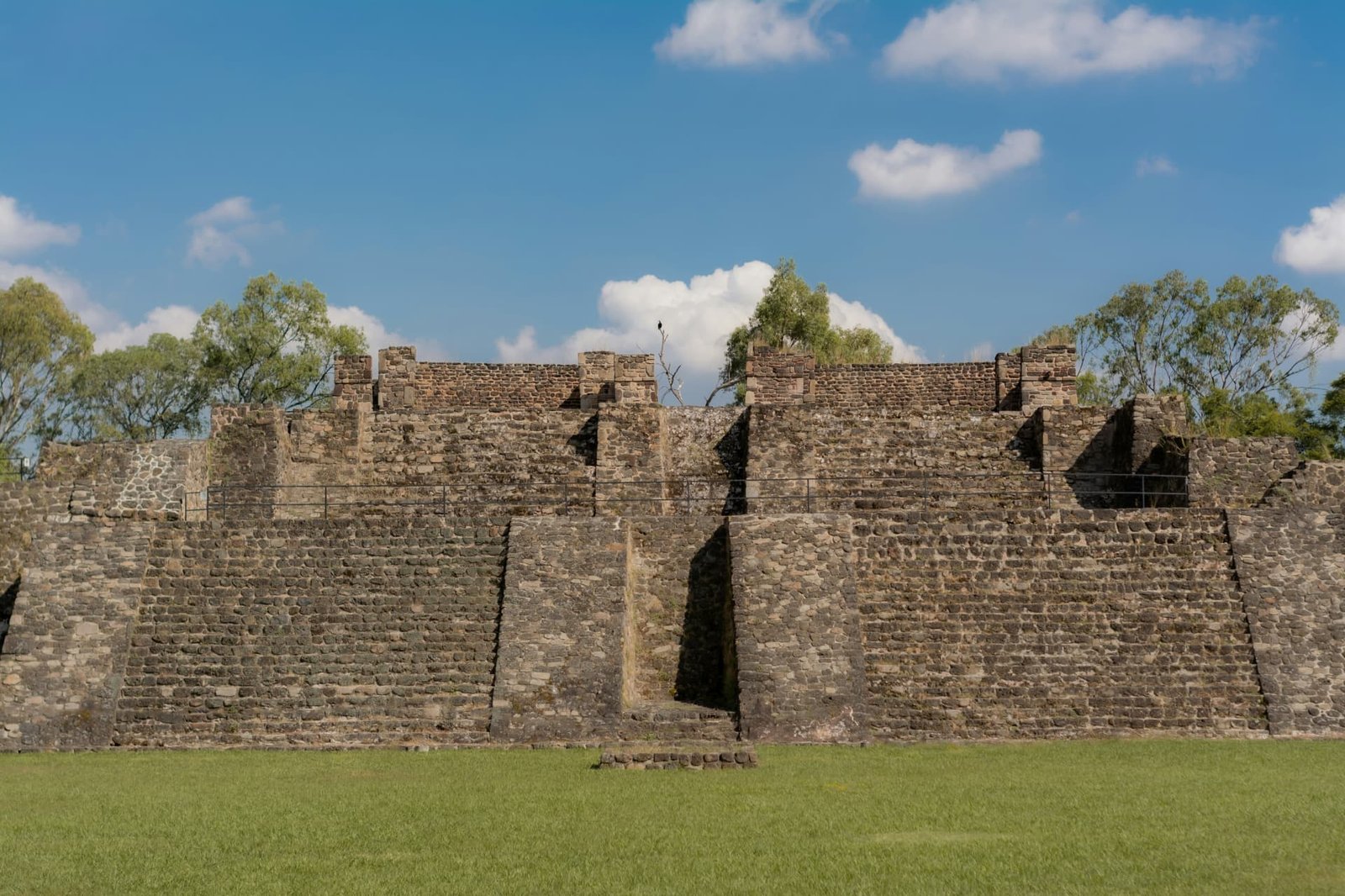
The pre-Hispanic city on a hilltop, about 25 miles out. The Pyramid of the Feathered Serpents and an observatory inside a cave. Open daily 9 a.m.–6 p.m., last entry at 5. Admission 105 pesos with Mexican ID or residency and 210 for foreign visitors, INAH's 2026 rates.
Eleven miles north, twenty minutes by car. The market, the convent and the climb to the Tepozteco, which is a long hour of stone steps and worth starting early. It fits in half a day and plenty of people stay to eat there.
It sounds like a joke and it is the plan. Cuernavaca was invented as a place to come and do nothing in a garden with a pool, and that is still what it does best. One of your three days has to be this one or you picked the wrong destination.
Getting around
This is the trip everyone makes, about 53 miles. Pullman de Morelos leaves from Central del Sur, at Taxqueña, roughly hourly, and also connects with the airport. The ride runs about an hour and a half depending on traffic, and considerably more on the free road. Driving, always take the toll highway, the 95D: CAPUFE does frequent overnight maintenance on the La Pera stretch, roughly ten at night to five in the morning, so the comfortable window is daytime, eight to six.
The center walks end to end and it is the only part that does. For Acapantzingo, Tlaltenango or the garden belt there are taxis and rideshares. The city is built over ravines, so map distances deceive: two points that look close can require a long way around.
Tepoztlán has a direct and frequent bus. Xochicalco is awkward on public transportation and most people drive or hire the transfer. Arrange the return before you get out, as with any excursion in this region.
What most guides leave out
Several foreign ministries, the U.S. State Department among them, advise against travel to the state, and Cuernavaca has a high homicide rate for its size. That said, the violence is not directed at visitors and the center by day is an ordinary city. The usual rules apply and they work: move on the toll highway, the 95D, and not on the free road at night; do not take the Huitzilac or Zempoala turnoffs after dark; do not wander at night; leave nothing visible in the car and park somewhere attended.
The weather is nearly identical three hundred and sixty-five days a year, so the real variable is how many people are here. Friday through Sunday, Mexico City comes down and prices, lines and noise all change. Monday through Thursday you get a different city for less money.
It is built over a network of deep gullies, which means two points a quarter mile apart on the map can require a mile-and-a-quarter detour. Outside the center it walks badly. Plan on transportation for anything beyond the old town.
This is a city of houses that face inward: a blank wall to the street and all the money spent on the garden inside. Walking around, it will strike you as uglier than it is. Do not judge a place to stay by what you can see from outside, or the center by its first impression.
Morelos makes green pozole with pumpkin seed and herbs, and it is a different thing from the white pozole of Jalisco or the red of the north. It is the dish that defines the city. At many pozolerías the full set of accompaniments only comes out Thursday through Sunday.
If you only have three days
Arrive midweek and give the day to the center, which you can see entirely on foot. The Museo Regional de los Pueblos de Morelos for the Rivera mural, the Jardín Borda mid-morning and the Robert Brady last, which is the one nobody expects and the one you remember. Green pozole at El Barco.
Head out early to Xochicalco, before the sun hits the hilltop, and come back to eat at La India Bonita, in the courtyard. Do not schedule the afternoon: this is the day to use the pool you paid for.
Tepoztlán, twenty minutes away. Climb the Tepozteco first thing if you want the effort, or stay with the market and the convent if you do not. Eat there and drive back in daylight, which is the rule everywhere in this region.