
Guanajuato

Calma guide · Bajío, Mexico

Guanajuato

The city that outgrew its ravine and put the traffic underneath.

Reviewed · 10 min read

Why here

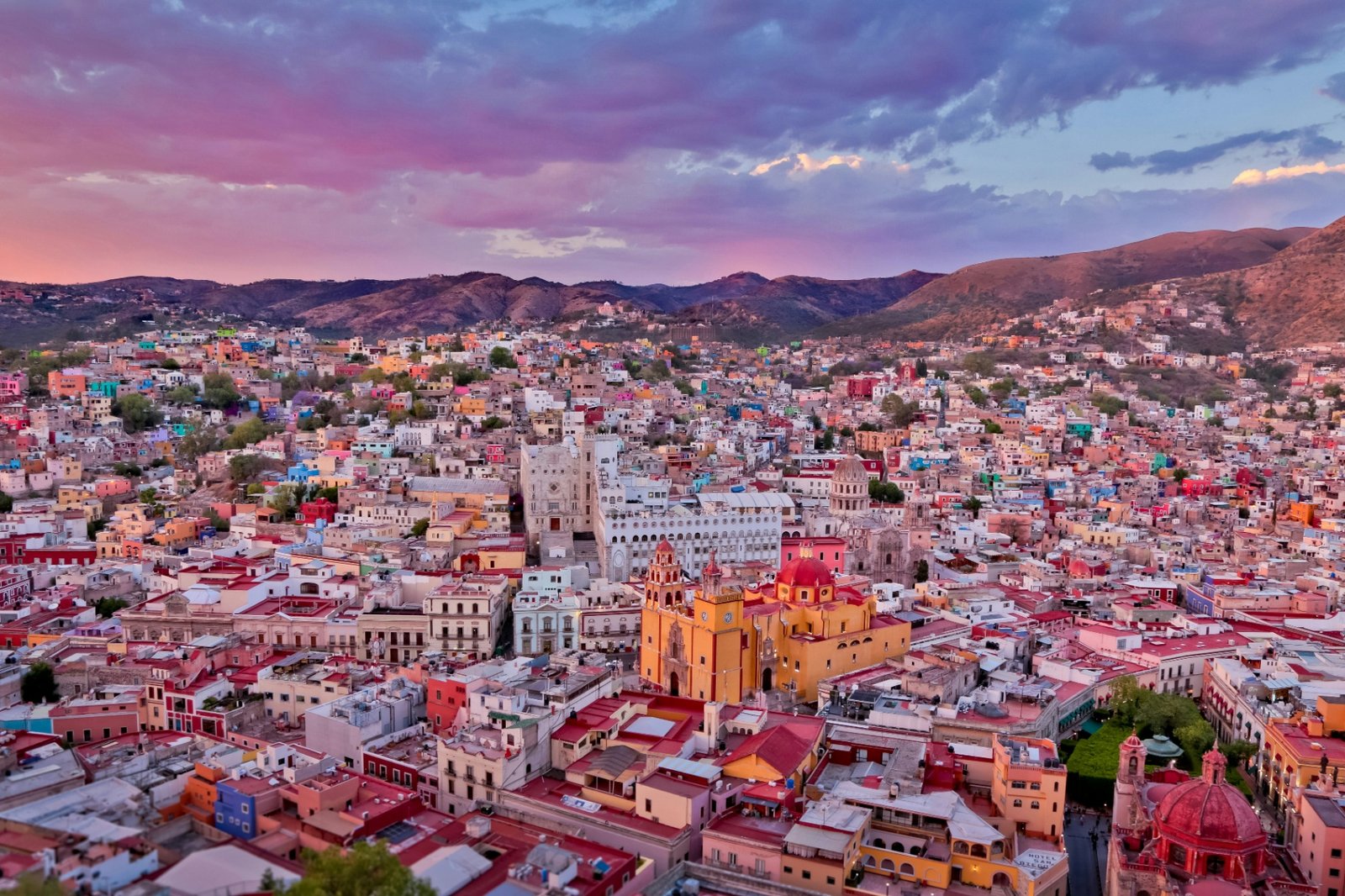
Guanajuato was built inside a narrow ravine, on the silver that came out of its hills, and it grew upward because there was nowhere else to go. Everything strange about it follows from that: alleys that are really staircases, plazas that appear wherever they fit, colored houses climbing the slope until the ground runs out. UNESCO listed it in 1988, and not just the center: the mines too.

And it has an engineering answer that exists nowhere else in the country. The river that ran through the city was diverted, its stone channels were left empty, and the traffic went down into them. Cars move underneath the city, through vaulted tunnels, and what is left on the surface is walkable. Add the Universidad de Guanajuato, which keeps students here year-round, and what you get is a historic city that is not a museum.

Guanajuato is vertical and makes no secret of it: outside four streets at the bottom of the ravine, everything is slope and stone staircase. With a wheeled suitcase, a stroller or limited mobility it is a hard destination, and it is worth knowing where you are sleeping before you book up the hillside. You are at 2,000 meters, so nights want a jacket all year. And there are two weeks in October, the Cervantino, when the city fills to the brim and prices double: it is an enormous festival, but if you are not coming for it, avoid it. If what you want is Mexico comfortable and in English, San Miguel de Allende is an hour away and a different thing.

Language
Spanish. Far less English than San Miguel, and that is part of the point
Currency
Mexican pesos (MXN)

When to go

November and early December

The rains are over, the Cervantino has gone, and the Bajío settles into dry and clear. Mild days, genuinely cold nights, and the city handed back to its students. It is the best combination of weather and calm the year offers.

March and April, dry and mild, with Viernes de Dolores in the middle if you want to see the city in its own deepest tradition.

June to September, with short hard afternoon storms. They leave the hills green and the mornings clean, but almost everything here is a slope, and wet cobblestone on a gradient is more slippery than it looks.

Season or eventWhenWhat it changes
Festival Internacional CervantinoOctober. The 54th edition, in 2026, runs the 3rd to the 18th, with France as guest countryThe largest performing arts festival in Latin America, with more than two hundred performances spread across the Teatro Juárez, the Alhóndiga esplanade, the plazas and the university. The whole city fills and lodging sells out months ahead. Either you come for it, or you do not come in October.
Viernes de Dolores and the Day of FlowersThe Friday before Palm Sunday, with the Day of Flowers from the ThursdayThe most local tradition there is, with monumental altars of colored water, sprouted wheat and flowers. It comes from the seventeenth century and from the mine: miners took the Virgen de los Dolores as their patroness for what they risked underground. This is the city showing its own, not a performance for visitors.
Día de la CuevaJuly 31The pilgrimage up to the cave of San Ignacio de Loyola, on the hill. A genuine local feast, with crowds climbing all day and the center slower than usual.
WeekendsAll year, Friday to SundayThey come down from León, Querétaro and Mexico City. A Tuesday and a Saturday are two different cities: the same advice we give for Cuernavaca, San Miguel and Sayulita.

The Cervantino is the one date on the calendar that cuts both ways: it is the best reason to come to Guanajuato and also the worst week to come if that is not why. Decide before you look at flights, not after.

Getting there

Flights to Guanajuato.

Search flights and fares

From

Mexico City

MEX

Duration

1h 10m

From

Los Angeles

LAX

Duration

3h 30m

From

Houston

IAH

Duration

2h 20m

From

Madrid

MAD

Duration

11h 00m

Common routes. Airfares change daily, so we do not fix a price here: search for your dates.

Where to stay

Where to stay in Guanajuato.

See all stays
Consultando disponibilidad real en Guanajuato

First, choose the neighborhood.

Choose the area before the hotel. In Guanajuato, it changes the trip substantially.

The center and the Jardín de la Unión

The floor of the ravine, with the triangular plaza of clipped laurels, the Teatro Juárez across from it and the basilica two streets away. Everything you came to see is inside this.

For a first visit, and for anyone who wants to do it all on foot without climbing every time.

Keep in mind: This is where the noise is. The callejoneadas come singing under the windows until late, and the bells start early.

Paseo de la Presa

The nineteenth-century avenue climbing toward the Olla reservoir, with big houses, gardens and a much calmer scale. It is the old elegant quarter.

For anyone who wants a silent night and a fifteen-minute walk down to the center.

Keep in mind: The way back is uphill, and the avenue is poorly lit after dark.

Marfil

Down the valley to the west, where the silver-processing haciendas were. Green, wide, with hotels inside the old estates.

For anyone driving, wanting space, and not minding being outside the center.

Keep in mind: You are out of town: every trip down to the center is a car or a taxi, through the tunnel.

The hillsides and La Valenciana

The colored houses from every photograph, climbing the slope, and at the very top the mine and the church of San Cayetano.

For repeat visits, for views, and for anyone unbothered by stairs.

Keep in mind: This is where vertical stops being picturesque. Check how many steps there are from where the taxi drops you to the door, and ask before you book.

Where to eat

Where to eat in Guanajuato, and exactly what to order.

Reference prices per person, in Mexican pesos (MXN).

Breakfast and the market

Mercado Hidalgo

Avenida Juárez, five minutes from the Jardín de la Unión$ · 60–150

The municipal market in an iron-and-glass hall, opened by Porfirio Díaz on September 16, 1910 for the Independence centenary. The food stalls are upstairs, on the gallery.

What to order

A guacamaya, the bread roll stuffed with chicharrón, salsa and lime, and enchiladas mineras from any of the upstairs stalls.

The honest part: You will read everywhere that Gustave Eiffel designed it. We do not publish that as fact: sources split between Antonio Rivas Mercado, the engineers Ernesto Brunel and Ponciano Aguilar, and Eiffel's workshop. It is a magnificent 1910 hall and it needs no embellishment. Cash only, and each stall keeps its own hours.

Lunch

Truco 7

Calle del Truco 7, half a block off the Jardín de la Unión$$ · 150–300

Cloth tablecloths, walls covered in paintings, low light — one of those places that has stayed put for decades. It is the bohemian classic of the center.

What to order

The enchiladas mineras, the city's dish: tortillas passed through guajillo salsa with potato and carrot, chicken on top. Otherwise the enmoladas.

The honest part: We publish no hours: the ones circulating come only from aggregators. It is small and by half past two there is no table. Decent café de olla, which is not easy to find downtown.

Dinner

Casa Valadez

Jardín de la Unión 3, facing the Teatro Juárez$$$ · 350–600

The dining room with the best address in the city, open more than seventy years and now under Karen Valadez's kitchen. It mixes Guanajuato dishes with an international menu.

What to order

The house side before the international one: the enchiladas mineras and whatever is regional that season.

The honest part: You pay for the terrace as much as the cooking, and during the Cervantino there is no sitting down without a booking. The street tables are the ones worth having.

Santo Café

Del Campanero 4, on the alley bridge$$ · 120–250

A small café and dining room built literally on top of a pedestrian bridge, with tables leaning over the alley on both sides.

What to order

Enchiladas mineras or a baguette, and stay to watch the city pass underneath. It has real vegetarian options, not the obligatory salad.

Phone: +52 473 122 2320

The honest part: There are four tables and everyone wants the one on the bridge. No hours published by them, so we give none. It works as well for an afternoon coffee as for a light dinner.

Prices per person, in pesos, with one drink. Guanajuato is markedly cheaper than San Miguel de Allende for the same thing, and at the market the gap is several times over.

What to do

6 plans, from half a day to a full day.

The city on foot, and the tunnels underneath

The plan is the place. Drop down from the Jardín de la Unión through the alleys, come out at Plaza San Fernando, climb up to Baratillo, get lost. At some point look into the mouth of a tunnel: the river channels, empty and stone-vaulted, are where the traffic goes now. Some stretches can be crossed on foot where marked, and it is the best way to understand why the surface walks so well.

An unplanned dayIn town

El Pípila and the funicular

The lookout over the ravine, the whole city below and the yellow basilica in the middle of the frame. The panoramic funicular takes five minutes: lower ticket office behind the Teatro Juárez, upper one beside the monument. One-way 35 pesos, return 70. It runs Monday to Friday 8am to 9.50pm, Saturdays 9am to 9.50pm and Sundays 10am to 8.50pm. Go up at golden hour and come down after dark, because the lit city from above is a different thing.

An afternoonIn town

La Valenciana: the mine and San Cayetano

Up the hill, the mine that carried the city for centuries and, facing it, the churrigueresque church its owner paid for. San Cayetano's gilded altarpieces are among the best in the Bajío, and at the mine mouth you go down a stretch of the shaft to see where all of it came from.

Half a morningTransportation needed

Alhóndiga de Granaditas

The grain warehouse turned fortress where independence actually began, and today the regional museum with the Chávez Morado murals. This is where you understand that Guanajuato was not only silver.

Half a morningIn town

A callejoneada

The estudiantinas set out from the Jardín de la Unión at nightfall, in capes, with lutes and a wineskin, and pull along anyone who wants to come, singing through the alleys. It is touristy and it is very old at the same time, and it works: half the city walks behind them.

A couple of hours at nightIn town

The Mummy Museum

It is the most visited thing in the city, and it is worth knowing exactly what it is before you go in. These are naturally mummified bodies, disinterred from the municipal cemetery between the nineteenth century and the mid-twentieth because their families could not pay the fee. They are not archaeological pieces: they are residents of this city. General admission was 106 pesos in 2026, 62 for minors and 32 for over-sixties, plus 38 to use a camera, and it costs more buying online. It opens 9am to 6pm every day of the year and the visit takes about twenty minutes.

Check before leaving: There is an open conflict you will not read at the ticket window. In November 2025 INAH presented a study warning of critical damage from transfers and poor conservation, and it had earlier joined the Ministry of Culture in condemning the museum for altering the exhibition without consulting it, despite a signed agreement. Academics are calling for reburial. We are not telling you not to go in: we are telling you to know what you are looking at, and what you are taking part in.

An hourIn town

Getting around

From the airport

You fly into Del Bajío (BJX), which sits in Silao about thirty minutes from the center. Authorized taxis are booked at the desks inside the terminal, the only ones allowed in, and run roughly 420 to 550 pesos. Uber operates in the area. By bus you have to change in León and lose the morning: a taxi or transfer settles it in half an hour.

Around the city

On foot, and there is no better option. The whole center crosses in twenty minutes on the flat, and everything else is a climb. Taxis are cheap and worth it for coming back uphill at night: ask to be dropped as close to the door as possible, because the last hundred meters are usually steps.

Getting out

San Miguel de Allende is a long hour away and Dolores Hidalgo an hour and a quarter, with its ice creams in impossible flavors. Cristo Rey del Cubilete, on the hill considered the country's geographic center, is about forty minutes. All three work by car or as a half-day tour.

What most guides leave out

The city is vertical, and that decides where you sleep.

The floor of the ravine is flat and everything else climbs. Plenty of places with a view advertise themselves as central and sit eighty or a hundred and twenty steps above the street the car reaches. Ask how many steps there are from where the taxi stops, in those words. With a wheeled suitcase, small children or unreliable knees, sleep at the bottom.

The tunnels disorient everyone, GPS included.

They are the old river channels, stone-vaulted, and the traffic runs through them. Underground the phone loses signal and the map stalls, so if you are driving, learn your exit by name before you go in. And if you are in a taxi, do not be alarmed when you both vanish under the city: that is the normal route.

You are at 2,000 meters and the nights are cold all year.

Midday sun in the Bajío is deceptive. At 2,000 meters, the moment it sets the temperature drops fast, and in winter it approaches freezing before dawn. A jacket always, however short-sleeved the day was. And shoes with a sole: you walk on uneven stone, on a gradient.

The Cervantino doubles the city's prices.

In October, and in 2026 it runs the 3rd to the 18th with France as guest country. It is the largest performing arts festival in Latin America and it fills the city to the brim. Lodging sells out months ahead and goes up, and the plazas close off for stages. If you are coming for the festival, book the moment the program lands. If you are not, change your dates.

The mummies are real people's bodies, and there is an open conflict.

It depends what you are expecting, and it is worth knowing what the ticket window leaves out. These are people disinterred from the municipal cemetery because their families could not pay the fee. In November 2025 INAH warned of critical damage from poor conservation and transfers, and it has criticized the museum for changing the exhibition without consulting it. There are academics calling for them to be buried again. It is the most visited site in the city and also the one least like what people think they are going to see.

Guanajuato and San Miguel de Allende are opposites, an hour apart.

San Miguel is more expensive, more comfortable, more polished, and with far more English on the street. Guanajuato is a working university city, cheaper and considerably harder to walk. Neither is better: they are different trips. If it is your first time in Mexico and you want both, give each two nights and do not try to do one from the other in a day, because the drive eats what is good about both.

If you only have three days

The shortest itinerary that works.

1

Put the map away. Go down to the Jardín de la Unión, sit under the laurels in the late afternoon, then get lost in the alleys with no destination, which is how this city is learned. Dinner at Casa Valadez with the Teatro Juárez in front of you, and at nightfall join a callejoneada from the plaza.

2

Take the funicular up to El Pípila early, when the light comes in sideways across the colored houses. Come down to the Mercado Hidalgo for a guacamaya and carry on to the Alhóndiga de Granaditas. In the afternoon, La Valenciana: the mine mouth and San Cayetano's gilded altarpieces. Come back for dinner at Santo Café, on the bridge.

3

Leave the ravine. Dolores Hidalgo for its ice creams and for where all of it started, or Cristo Rey del Cubilete if you would rather have the hill and the view. If you still want city, San Miguel de Allende is an hour away, but then stay the night there instead of driving back after dark.