
Mérida

Calma guide · Yucatán, Mexico

Mérida

A white-stone city with cenotes an hour away and cochinita at seven in the morning.

Reviewed · 11 min read

Why here

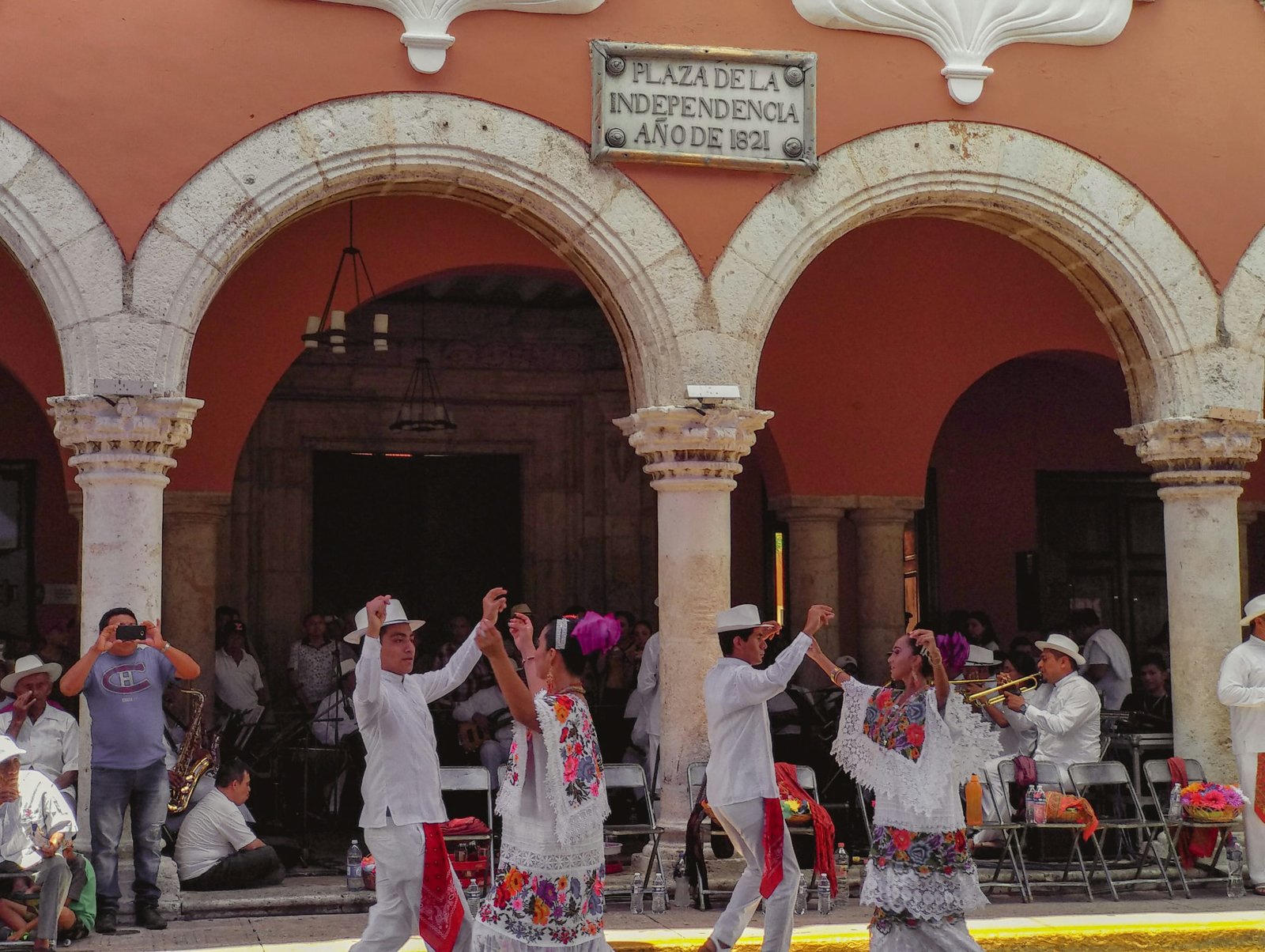
Mérida was built with the stone of the Maya city underneath it, then grew rich on henequen: that is where the mansions of Paseo de Montejo and the haciendas ringing the city come from. It is a capital of courtyards, high walls and numbered streets, with a cultural life the city hall spreads across the days of the week — Monday nights bring a free vaquería with jarana dancing in front of the Plaza Grande, and in January the city spends two weeks celebrating itself at Mérida Fest.

It is also the best base in the peninsula. An hour away there are dozens of cenotes of clear water, an hour and a quarter to Uxmal, an hour and a half to Izamal painted entirely yellow, and just over half an hour to the Gulf at Progreso. And you eat things here you do not eat the same way anywhere else: cochinita pibil, relleno negro, panuchos, papadzules, plus a chef-led scene that has spent years reinterpreting all of it with peninsular produce.

The heat here is real and it is the great filter of this destination: from May to September the city becomes a humid oven, with rain from June to October and hurricane season running to November. Travel then and you need a pool and a siesta, not a plan to walk at three in the afternoon. It is also not a beach destination: Progreso is half an hour away and it is a Gulf port, not the Caribbean of Tulum. And almost everything good nearby — cenotes, ruins, towns — is one to two hours out, so without a car or tours the city runs short after four days.

Language
Spanish, with Yucatec Maya alive in the towns around it
Currency
Mexican pesos (MXN)

When to go

November to March

This is the temperate dry season: you can walk the centre at midday, the cenotes are at their best, and the calendar brings the city's own things, from Mérida Fest in January to Carnaval in February and the Chichén Itzá equinox in March.

October, for Hanal Pixán: the whole city builds altars and closes the month with the Paseo de las Ánimas. It can still rain, but it is the most soulful date of the year.

It rains from June to October, and hurricane season runs June to November, peaking August to October. Mérida sits inland and suffers less than the coast, but those months combine afternoon rain, high humidity and the hardest heat of the year.

Season or eventWhenWhat it changes
Mérida Fest5 to 18 January in 2026, for the city's anniversaryTwo weeks of free city programming, opening on the 5th with the alborada and a street procession on the Plaza Grande at ten at night. It is the best way to watch the city celebrate itself rather than perform for visitors.
Carnaval de Mérida11 to 18 February in 2026Held at Plaza Carnaval in the Xmatkuil fairgrounds, outside the centre, with parades and concerts. The dates move every year, always before Lent, so confirm them before booking flights.
Hanal Pixán and the Festival de las ÁnimasAll October, through 2 NovemberThe Yucatecan version of Day of the Dead: altars, seasonal food and the Paseo de las Ánimas as the finale. The city publishes the programme in September, shortly before.
Equinox at Chichén ItzáAround 20 and 21 March, visible for four or five daysKukulcán descending the staircase, with a special INAH operation and enormous crowds. It shows for several days running, so going on the 19th or the 22nd is the smart way to see it without the exact-day crush.
Vaquería at the Palacio MunicipalEvery Monday night at 21:00Yucatecan jarana in front of the Plaza Grande, free to attend. It is weekly, it belongs to the city and it costs nothing: if your trip crosses a Monday, that evening is settled.

Mérida spreads its cultural life across weekdays, not just seasons. Before building an itinerary, check which day you land on: Monday has the vaquería, and that orders the whole week.

Getting there

Flights to Mérida.

Search flights and fares

From

Mexico City

MEX

Duration

2h 05m

From

Miami

MIA

Duration

2h 00m

From

Cancún

CUN

Duration

3h 35m

From

Madrid

MAD

Duration

12h 00m

Common routes. Airfares change daily, so we do not fix a price here: search for your dates.

Where to stay

Where to stay in Mérida.

See all stays
Consultando disponibilidad real en Mérida

First, choose the neighborhood.

Choose the area before the hotel. In Mérida, it changes the trip substantially.

Centro and the Plaza Grande

The historic grid, with the cathedral, the markets, Casa de Montejo and colonial courtyards turned into small hotels.

A first visit, and anyone who wants to do everything on foot.

Keep in mind: It is the noisiest, most trafficked part, and the pavements are narrow. Look for a hotel with a courtyard and shade.

Santa Ana

A few blocks from the centre, around its market and church. A traditional barrio of restored houses with a food scene that has grown fast.

Second visits, and anyone who wants to eat breakfast where the city eats it.

Keep in mind: The market starts early and you hear it. In exchange, the best cochinita downtown is around the corner.

Santiago

The bohemian barrio of the centre, with its park, its bars and the most mixed nightlife in the city, the queer scene included.

Younger travellers, and anyone who wants to go out without a taxi.

Keep in mind: At weekends the park does not go quiet early.

Paseo de Montejo

The henequen avenue, with Porfirian mansions, museums like Palacio Cantón and Mérida's priciest boutique hotels.

Anyone who wants architecture, big trees and a proper sunset walk.

Keep in mind: You are twenty to thirty minutes' walk from the centre, and in April those minutes weigh.

García Ginerés and Itzimná

The leafy residential barrios to the north, quiet, holding the city's best chef-led cooking, Kuuk included.

Longer trips, anyone with a car, and anyone who sleeps badly with noise.

Keep in mind: You do not walk to the centre from here: night plans mean a taxi or an app.

Where to eat

Where to eat in Mérida, and exactly what to order.

Reference prices per person, in Mexican pesos (MXN).

Yucatecan breakfast, which is the important meal

Cochinita is a morning dish here: cooked overnight, sold early, gone by mid-afternoon.

Manjar Blanco

Calle 47 #496, between 58 and 60, facing the Santa Ana market$$ · 150–300

Home-style Yucatecan cooking in a small room across from the Santa Ana market. It appeared on Taco Chronicles and did not change because of it.

What to order

The cochinita pibil, no argument. And if there are two of you, a relleno negro to understand where this cooking comes from.

The honest part: It closes in the afternoon, so this is breakfast or an early lunch; we do not state exact hours because sources contradict each other. It is small, and at peak hours you wait.

Mercado Lucas de Gálvez

Calle 65 by 54 and 56, Centro

Mérida's big market, over two thousand stalls of fruit, spice pastes, recado rojo and cooked-food counters.

What to order

Panuchos and salbutes at any of the fondas, plus recado rojo and pumpkin seed to take home.

Hours: 6:00 to 22:00, with some stalls opening earlier

The honest part: This is a working market, not a gourmet one: there is meat, smell and hurry, and nine in the morning is its best moment. Cash only, and each stall keeps its own hours.

Lunch

La Chaya Maya

Calle 62 by 57, Centro$$ · 200–400

The downtown classic for regional food, with tortillas made by hand in view and a long menu of Yucatecan dishes.

What to order

Sopa de lima, papadzules and poc chuc. This is the place to try four things at once on a first visit.

Hours: Daily, 7:00 to 23:00 at the downtown branch

Official website

The honest part: It is the most touristed place on this list and it knows it: there is a queue at lunch and the service is brisk. It still cooks its own thing well, and it has several branches with different hours, so confirm yours.

Micaela Mar & Leña

Calle 47 #458, between 52 and 54, Centro

Gulf fish and shellfish over wood fire, in a courtyard house downtown. It is in the Michelin guide to Mexico.

What to order

Whatever came in that day and went on the fire, and the fish tacos if you want the easy way in.

Hours: Sunday to Wednesday 13:00 to 22:30; Thursday to Saturday 13:00 to 23:30

The honest part: Book, especially Thursday to Saturday. This is Gulf seafood, not Caribbean: less postcard, more flavour.

Dinner

Kuuk

Avenida Rómulo Rozo 488, Itzimná

The home of contemporary Maya fine dining in Mérida, in a mansion with a garden, tasting menu only, peninsular produce throughout.

What to order

The full tasting menu. You do not come here to order à la carte.

Official website

The honest part: Book well ahead, and it is by far the most expensive dinner of the trip. We publish no hours because they shift with the season: you confirm them when you reserve.

Apoala

Calle 60 #471, unit 2, Portales de Santa Lucía$$ · 300–550

Chef-led Mexican cooking under the arcades of Santa Lucía park, on a menu that crosses Oaxaca and Yucatán.

What to order

Something mezcal to start, and the dishes where both kitchens show at once.

Hours: Monday to Saturday 13:00 to 24:00; Sunday 14:00 to 22:00

The honest part: The arcade tables are the ones worth having and the first to go. Some nights the park has live music, which is part of the plan rather than a nuisance.

Prices per person, in pesos, with one drink. Cochinita is a morning dish, which is why it sits in the breakfast block: ordering it at nine at night is ordering yesterday's.

What to do

8 plans, from half a day to a full day.

The cenotes at Homún or Cuzamá

An hour from the city there are two classic routes. Cuzamá is done on a rail truck, more orderly and more visited; Homún has dozens of family-run cenotes and you hop between them by moto-taxi, with far more freedom. Homún also holds the Santa Bárbara complex, with several cenotes, bikes or a shuttle between them and its own restaurant. Prices are set by each community and change, so ask at the gate.

A dayTransportation needed

Uxmal, the better choice if you only pick one

An hour and a quarter south, with the rounded-corner Pyramid of the Magician and the Nunnery Quadrangle. Open daily 8:00 to 16:00, last entry 15:00. You pay at two windows: INAH, 105 pesos, and the state parador, 461 for foreigners and 157 for Mexican nationals. Yucatán residents are exempt from the state portion. Far fewer people than Chichén, and you can climb almost everything.

A long half dayTransportation needed

Chichén Itzá with the single ticket

Two and a half hours east, and since March 2026 on a permanent single-ticket scheme that merges the federal and state charges; the INAH base rate is still 105 pesos and the total for foreigners runs around 697. Open 8:00 to 16:00, and Yucatán residents skip the state portion throughout 2026. Go at opening: by eleven it is a different place.

Check before leaving: INAH updates archaeological site fees every January. Confirm the day's price at the window.

A dayTransportation needed

The Gran Museo del Mundo Maya

The city's big museum, north of the centre, and the best introduction to the peninsula before you set foot in a ruin. Open Wednesday to Monday 9:00 to 17:00, closed Tuesdays. General admission is 200 pesos, 100 for nationals and 50 for Yucatán residents. Its Maya-of-today room is the one that explains this is not a vanished civilisation but a language spoken an hour from here.

Two or three hoursTransportation needed

Palacio Cantón, on Paseo de Montejo

The most ambitious mansion on the avenue, now the regional anthropology museum. Open Tuesday to Sunday 8:00 to 17:00, general admission 210 pesos and 105 for nationals and residents in Mexico. You visit it as much for the house as for what is inside.

An hour and a halfIn town

Izamal, the yellow town

An hour and a half east: an entire town painted yellow and ochre around the convent of San Antonio de Padua, founded in 1549 on a pre-Hispanic base. In the same town stands the Kinich Kakmó pyramid, which you can climb for a view of just how flat Yucatán is. We give no convent hours because no official source publishes them: go in the morning.

Half a dayTransportation needed

Progreso, the Gulf half an hour away

Mérida's port, with a malecón, an absurdly long pier and seafood on the sand. You get there on the Va y Ven public system or by car in just over half an hour. It is not the Caribbean: this is Gulf water, greener and warmer, and on a norte day it turns grey. It works as a loose afternoon, not as a reason for the trip.

Half a dayTransportation needed

The Monday vaquería

In front of the Plaza Grande, at the Palacio Municipal, there is Yucatecan jarana every Monday at nine at night, free to attend, with local couples dancing with bottles balanced on their heads. It is a living tradition rather than a show staged for visitors. The city also programmes free activities on other days of the week.

An hour, at nightIn town

LGBT travel

Mérida for LGBT travelers: where to go and where to stay.

Santiago and the centre

Mérida is one of the easiest places in southeastern Mexico to travel as a same-sex couple, and its scene is local rather than a circuit: neighbourhood bars, drag nights and a centre where nobody looks twice, instead of a nightlife district built for visitors.

Santiago holds most of that nightlife, walkable from the Plaza Grande, which means you do not need a taxi to go out.

The practical context

Yucatán has marriage equality and a full-equality legal framework, and specialist guides class Mérida in that group. In practice it is a conservative, inward-facing city: the scene exists but is discreet, and in the surrounding towns it pays to read the room. We found no official 2026 LGBTQ+ safety statistics for the state, so we do not cite any.

Bars, beach and clubs

Santiago Lounge

Barrio de Santiago

A neighbourhood bar and restaurant, one of the regular meeting points of the scene, walkable from the centre.

The honest part: It is a barrio place and a long night, not a big club. Confirm hours on their channels, which shift with the season.

DIX

Mérida

A bar with drag shows and themed nights, including its own YucaDrag night.

The honest part: Programming runs by night and is announced on their channels: check the week's line-up before going.

Where to stay

Getting around

From the airport to the centre

Manuel Crescencio Rejón airport sits southwest of the city, about twenty minutes from the centre. One detail catches many people out: inside the airport neither Uber nor DiDi may pick up passengers, only the terminal's authorised taxis, which charge by zone from a tariff posted at the counter. There are also private transfer companies with fixed prices if you would rather book ahead.

Apps and taxis inside the city

In the city Uber, DiDi and inDrive all work normally, and they are the easiest way to move at night or go up to Itzimná for dinner. Street taxis work too, but agree the fare before getting in when there is no meter in sight.

Va y Ven, the public system

Mérida's metropolitan network covers the city and the surrounding municipalities, Progreso included, and added new routes in 2026. It runs on a card and it is the cheap way to reach the coast. The fare is set by the state transport agency and changes: check it at the stop before loading a card.

The Tren Maya, and when to rent a car

Mérida has a Tren Maya station, and since April 2026 fares dropped by up to 30 percent across all routes and classes. Cancún is just over three and a half hours. For the cenotes, Uxmal and the towns, a car is still the practical answer: the state is flat, the roads are good and the distances are short — though the speed bumps in the villages are serious.

What most guides leave out

The heat decides your trip, not the price of the flight.

November to March. In those months the city is walkable, the cenotes are a pleasure and the calendar brings the best of it: Mérida Fest in January, Carnaval in February, the Chichén Itzá equinox in March. May to September combines the hardest heat of the year with humidity and, from June, rain; hurricane season runs June to November. You can travel then, and it is cheaper, but the plan changes: early mornings, pool at midday, outings at dusk.

You cannot order an Uber or DiDi at the airport.

In the city yes, at the airport no: the platforms are not allowed to pick up inside the terminal, and only authorised taxis operate there, with zone fares posted at the counter. It is a small fact that ruins the arrival of plenty of people who land at midnight expecting to order a car from the baggage belt. Have cash ready or book a private transfer before you fly.

Entry to the ruins is paid at two windows, and the state one is the heavy half.

In Yucatán the archaeological sites charge a federal INAH fee of 105 pesos plus a state fee that is what raises the bill. At Uxmal the state portion is 461 pesos for foreigners and 157 for nationals. At Chichén Itzá, since March 2026, both merge into a permanent single ticket and the total for foreigners runs around 697 pesos. Yucatán residents are exempt from the state portion, and at Chichén they are exempt throughout 2026 by state decree. INAH updates its fees every January, so confirm at the window on the day.

The cochinita runs out, and that is not a pose.

It is cooked overnight, buried, and sold in the morning: in the markets and neighbourhood kitchens it is gone by mid-morning and by noon they are scraping the pot. Places serving it at ten at night, every night, are reheating. If you are only going to eat it once in your life, set an alarm and do it before eleven.

Maya is not a dead language, and here you notice.

Yucatec Maya is spoken daily in the towns around the city — Homún, Cuzamá, Izamal — and it slips into the city's Spanish in dozens of words. The Gran Museo del Mundo Maya devotes a whole room to the present rather than the past. Learning to greet someone, even badly, changes how you are treated at a community-run cenote more than you would expect.

Mérida is the base, not the whole destination.

Three days shows you the city; five or six shows you the peninsula from it. Nearly everything big sits between one and two and a half hours out: cenotes, Uxmal, Izamal, Chichén Itzá, Progreso. Renting a car for two or three days beats stringing together single tours if there are more than two of you, and the Tren Maya solves the hop to Cancún in just over three and a half hours.

If you only have three days

The shortest itinerary that works.

1

Breakfast on cochinita at Manjar Blanco, facing the Santa Ana market, then walk down to the Plaza Grande and into Lucas de Gálvez with the market already running. Lunch on sopa de lima and papadzules at La Chaya Maya, and save the afternoon for Paseo de Montejo: Palacio Cantón, open until five, and the avenue as the sun drops. If it is Monday, close the day at the vaquería at the Palacio Municipal, at nine.

2

Head out early to the cenotes at Homún and hop between them by moto-taxi, or do Santa Bárbara if you would rather have it all in one place. Back mid-afternoon, take in the Gran Museo del Mundo Maya unless it is Tuesday, and have dinner on wood-fired seafood at Micaela, booked ahead if it is a weekend.

3

Uxmal at opening, with both the INAH and parador fees in hand, and climb everything they let you climb. Eat on the way back and return to Mérida in time for one last dinner under the Santa Lucía arcades at Apoala. With a fourth day, choose between Izamal in yellow and Chichén Itzá at eight in the morning.