
Centro Histórico
Walking distance to everything: mezcalerías, galleries and most of the food in this guide.
Anyone who wants to leave the hotel and already be where things happen.
Keep in mind: Constant noise. Bells, fireworks and music until late.
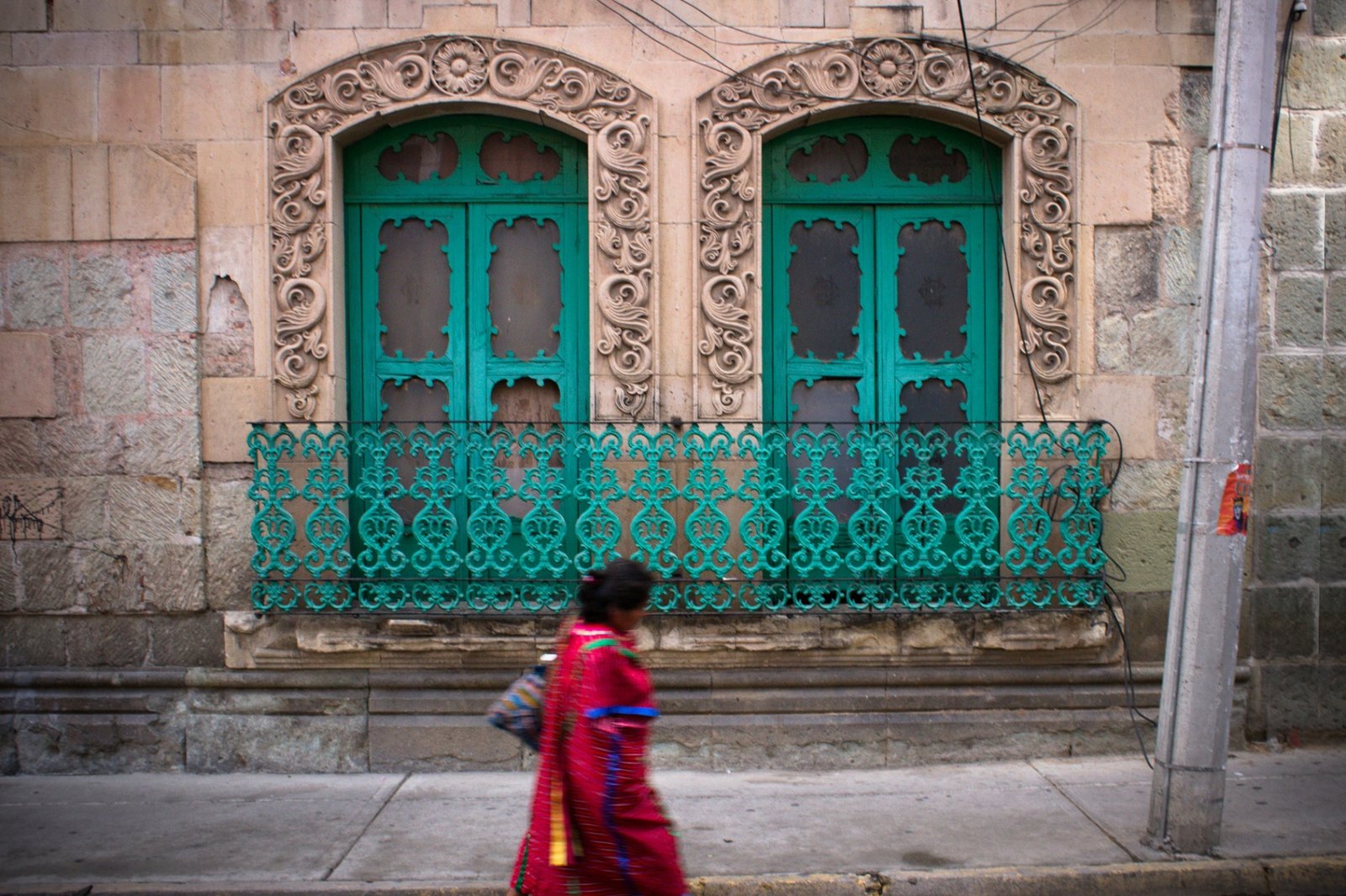
Calma guide · Sierra Sur, Mexico
Markets that smell of mole, and streets built for walking.
Reviewed · 10 min read
Why here
Almost everything in Oaxaca is made by hand. The mezcal, the mole, the textiles, the tortilla pressed in front of you while you wait. It is a high, dry, bright city where people eat at odd hours and you walk much farther than you plan to.
At seven in the morning it smells of comal and boiled coffee. At eleven at night the charcoal on Calle de los Libres is still lit.
This is not a resting trip. You sleep less than you meant to, there is noise, the cobblestones go up and down, and the food is intense starting at breakfast. If you want a lounge chair, an all-inclusive and quiet, the coast suits you better: Puerto Escondido, Zipolite or Mazunte. Since the Barranca Larga — Ventanilla highway opened, that drive is 2.5 to 3 hours by van, bus or car, and it is what almost everyone chooses now.
When to go
The rains have just ended, the valleys are still green, and the temperature is mild by day and cool at night.
March through May: dry and warm, with fewer people than in festival season.
June through September it rains most afternoons, in short storms. It does not ruin a trip, but it does shape any day trip into the Sierra or to Hierve el Agua.
| Season or event | When | What it changes |
|---|---|---|
| Guelaguetza | The two Mondays after July 16. In 2027, the 19th and the 26th | The city fills up. Hotel rates double and sell out months ahead. The state government publishes the official program and auditorium tickets in the spring. |
| Día de Muertos | October 31 – November 2 | The most in-demand dates of the year. Book four or five months out. This is not Halloween: it is a family observance that happens partly in cemeteries, and visitors are welcome in some villages and not in others. Ask before you photograph anyone. |
| Noche de Rábanos | December 23 | One night only, in the zócalo. Long lines to see the carvings. |
If you travel on those dates, expect high prices and expect the restaurants in this guide to be full. If you want the quiet version of the city, avoid them.
Getting there
From
Mexico City
MEX
Airline
Aeroméxico
Duration
1h 05m
Route
Nonstop
From
Los Angeles
LAX
Airline
Volaris
Duration
About 5h 15m
Route
1 stop
From
Houston
IAH
Airline
United or Aeroméxico
Duration
About 6 hours including the connection
Route
1 stop (Mexico City)
From
Dallas
DFW
Airline
American or Aeroméxico
Duration
About 6h 30m including the connection
Route
1 stop (Mexico City)
Common routes. Airfares change daily, so we do not fix a price here: search for your dates.
Where to stay
Choose the area before the hotel. In Oaxaca, it changes the trip substantially.
Walking distance to everything: mezcalerías, galleries and most of the food in this guide.
Anyone who wants to leave the hotel and already be where things happen.
Keep in mind: Constant noise. Bells, fireworks and music until late.
Cobblestones, painted facades and quiet cafés.
The prettiest part of the city and the best of it to walk by day. For travelers who would rather sleep at night.
Keep in mind: A 15- to 20-minute walk to the zócalo, and little open after dark.
Residential and quiet, with a textile tradition and neighborhood cooking.
Travelers who came for the craft and want the local rhythm.
Keep in mind: Steep streets with poor lighting at night. It is safe, but bring shoes you can walk in.
Off the visitor circuit. Contemporary cafés, supermarkets, ordinary life.
Long stays and second visits.
Keep in mind: You will need a taxi or a colectivo to get downtown each day.
Where to eat
Reference prices per person, in Mexican pesos (MXN).
A slow-fermentation bakery with a breakfast kitchen.
Avocado toast on sourdough, the kimchi and almond toast, or any pastry with café de olla.
Hours: Monday–Thursday, 8:30 a.m.–8:30 p.m. Friday and Saturday until 11 p.m. Closed Sunday.
The honest part: This is where you break from the heavy Oaxacan breakfast. It fills early on weekends and closes Sunday, which is exactly when most people go looking for it.
A kitchen devoted entirely to endangered native corn varieties. No industrial flour, no heavy fats.
Tetela filled with pressed chicharrón, squash-blossom quesadilla on a blue corn tortilla, and an atole, white or chocolate.
Hours: 7 a.m.–4 p.m. Sunday until 3 p.m.
The honest part: It is outside the center and closes mid-afternoon: breakfast or an early lunch, never dinner. You go for the corn, not the location.
Lunch is the real meal here, eaten between 2 and 4 p.m. Plan the day around it.
Thalia Barrios's kitchen, working from Sierra Sur recipes, native corn and local plants.
The yellow mole tamal, the heirloom tomato salad and the sopa de guías.
The honest part: You need a reservation and there are set seatings — you cannot walk in. It has held a Michelin star since 2024, so those seatings go fast. And do not come looking for the classic mole negro: the cooking goes somewhere else, and that is the reason to come.
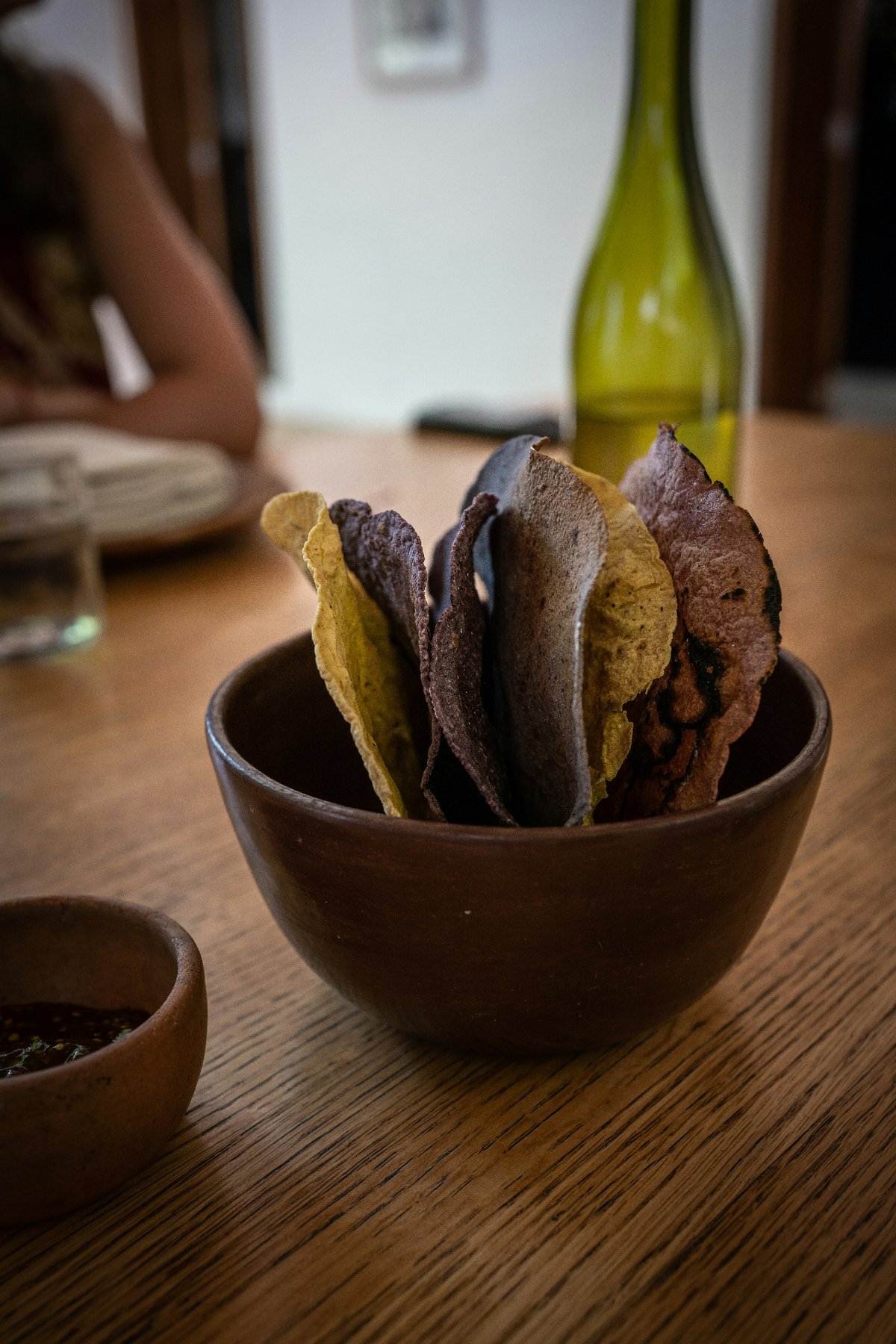
The home of Jorge León and his mother, Doña Elvia. Smoke cooking, no white tablecloths. A fixed five-course menu that changes with the season.
The whole menu. You do not choose: you eat what Jorge brought back from the market that morning. If you only want to taste the house, the home-style lunch runs about 750.
Hours: By reservation only, over WhatsApp.
The honest part: It is outside the city, a good half hour from the center and ten minutes from the airport, so arrange your ride back before you go. Book well ahead; there is not always room.
A cool courtyard and pre-Hispanic technique, well executed.
Caldo de piedra, cooked at your table by dropping fire-heated stones into broth with fish and shrimp. And the chichilo negro.
Hours: Breakfast 9 a.m.–noon. Lunch and dinner 2–10:30 p.m.
The honest part: It closes at midday between the two services, so check the clock before climbing up to Xochimilco. Reserve over WhatsApp at peak hours. Caldo de piedra lends itself to tourist theater; it does not become that here, but order it knowing it is a technique, not a show.
Both are on the same street and work back to back, except Monday.
Grilled over charcoal to order. They have been making tlayudas since 1952.
Tlayuda with asiento, quesillo, cabbage and chile-rubbed cecina. Ask for it open to share, folded to eat it the way it is eaten.
Hours: Daily from 7 p.m. until early morning.
The honest part: Better than the market versions, which tend to run greasy. Here the corn stays crisp. Do not confuse it with the other tlayuda stands on the same street: Doña Martha's is the one at 212.
A street stand. Suckling pig and chicharrón, nothing else.
Lechón tacos with chicharrón, and ask for them con todo: hot green salsa and extra chicharrón.
Hours: Tuesday–Saturday from 8 p.m. Closed Monday.
The honest part: There is almost always a line, but it moves. Cash only. This is how a night of mezcal ends, not a dinner plan.
Mezcal. At a specialized mezcalería, a 1.5-ounce pour of an artisanal or ancestral bottling runs 90 to 220 pesos. Before you buy a bottle, read the note below about plastic jugs.
They are different outings, and this is the useful order for doing both.
Centro Histórico, on foot
Specialized bars where you taste by the pour: espadín, tobalá, tepeztate and ancestral bottlings distilled in clay pots, served with water and worm salt. Work from lightest to heaviest and ask who the maestro mezcalero is and what state it came from.
Best for: An evening with no transportation involved, and a way to learn the difference before spending money on a bottle.
Santiago Matatlán and Santa Catarina Minas
The whole process: the conical pit oven, the stone tahona, fermentation in wooden vats and distillation — in Minas still in clay pots. You taste it straight off the still, undiluted.
Best for: Half a day or more with a car or a driver, and the way to buy at the source. Arrange the ride back before you get out.
What to do
Santo Domingo, the pedestrian street, the galleries. No plan and no transportation required.
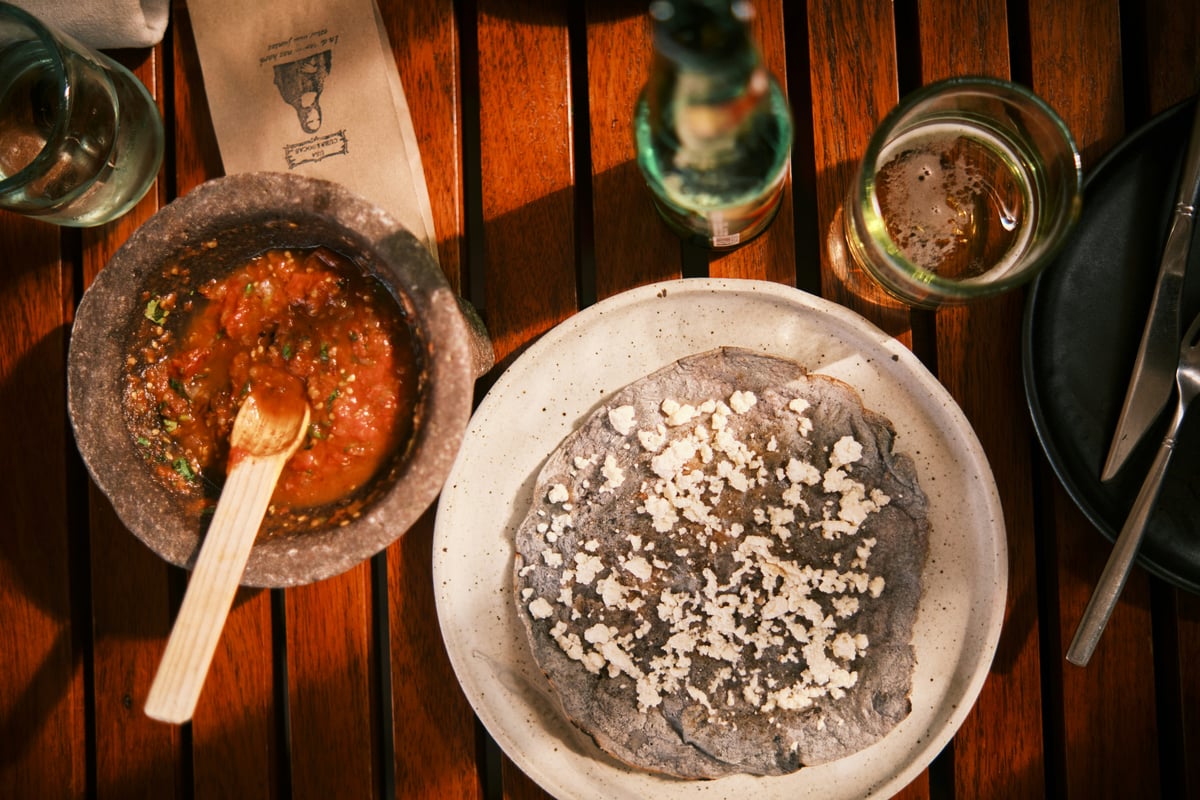
20 de Noviembre to eat, Benito Juárez next door, and Abastos if you want the real thing: enormous and making no concessions to visitors.
The Zapotec capital on a ridge above the valley, about 6 miles out. Go early: by midday the sun is direct and there is no shade. Admission is 210 pesos for foreign visitors and 105 with Mexican ID or residency, 2026 INAH rates. Sundays are free for nationals and residents, which is also when it is most crowded.
Santa María del Tule for the tree, Teotitlán del Valle for the weaving, Mitla for the stone mosaics, San Bartolo Coyotepec for black clay. They chain together in a day. Mitla costs the same as Monte Albán: 210 pesos for foreign visitors, 105 for residents.
Cuajimoloyas, Benito Juárez, Latuvi. Pine forest, trails and real cold at night. The contrast with the city is the reason to go.
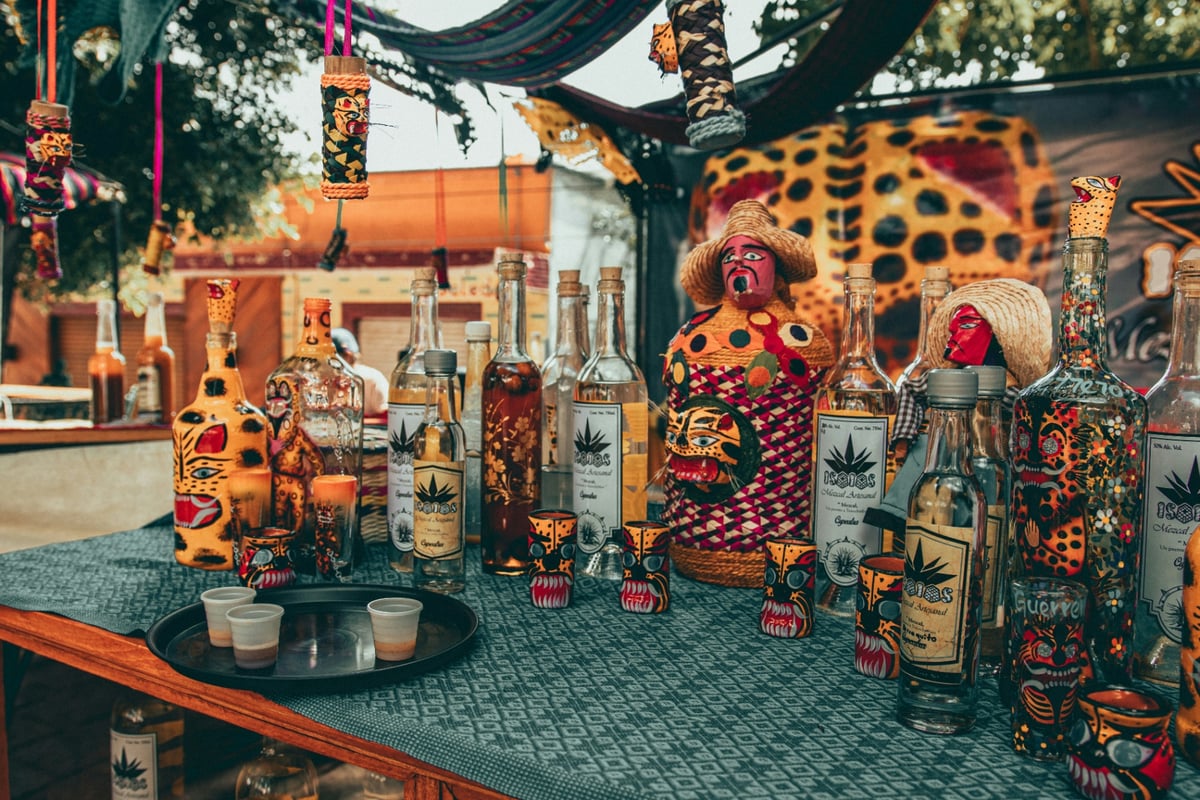
Around Santiago Matatlán. Go to a family palenque and taste it where it is made.
The petrified waterfalls, about 45 miles out. Admission runs 50 to 70 pesos plus a 20-peso community fee, cash only, and it is a morning trip.
Check before leaving: Access is managed by two communities, San Lorenzo Albarradas and San Isidro Roaguía, who have been in a land dispute for years. It closes without notice and without a schedule, most often between June and October. Confirm it is open the week before you book anything, and do not build the trip around this stop.
Traditional market days
If you can, match the outing to market day. It is the difference between a quiet town and a working market.
Tlacolula de Matamoros
The largest market day in the valley. Barter, lamb barbacoa, and the animal market at dawn.
Villa de Zaachila
The old Zapotec capital. Fewer visitors and the best food market of the week.
Ocotlán de Morelos
Clay, textiles and the Aguilar sisters' village. Pairs with San Bartolo Coyotepec.
Getting around
The airport is about 5 miles south of the city and the drive runs around 20 minutes depending on traffic. Inside the terminal there is an authorized ground transportation desk: the shared colectivo to the Centro Histórico runs about 135 pesos per person and a private taxi 120 to 200, depending on your hotel. Rates are posted at the counter and change without notice, so confirm them there before you get in.
The center is entirely walkable. For Xochimilco, Jalatlaco or Reforma there are taxis and ride apps.
This is the classic mistake. Getting to Teotitlán del Valle, Tlacolula or San Bartolo Coyotepec by Uber or Didi is easy. Getting back is nearly impossible — there are no drivers out there waiting. Arrange the return with the same driver before you get out, or learn to use the route colectivos, which leave from near the Mercado de Abastos.
You no longer need to fly. The Barranca Larga — Ventanilla highway brought the drive down to 2.5 to 3 hours, and it is what most travelers choose now: shared vans and buses leave daily from the city, and in your own car it is one stretch. The one-hour flight still exists, but it costs more and the schedules are thin. If you get carsick, sit up front — the last stretch down to the coast is all curves.
What most guides leave out
Calendas, patron saint festivals and mayordomías begin at daybreak with heavy fireworks. If you sleep near any church, in the Centro or in Xochimilco, you will hear them. No amount of soundproofing helps.
The roads out toward Tule and Mitla are lined with stands selling “artisanal” mezcal in PET jugs. Most are adulterated cane distillates or young agave pushed along with sulfates. To buy the real thing, ask to taste it and look for a stated proof between 90 and 110 (45% to 55% alcohol).
It is not only the tap water: watch the ice at unregulated stands and raw vegetables washed in tap water. Asiento, lard and charred chiles are a sharp change of diet on their own. Packing electrolytes is not overpreparing.
It is not Mexico City, but you feel it the first day: you tire sooner than expected and the mezcal lands faster. Drink water.
Market stalls, the tlayuda stands on Libres and family palenques do not take cards. Withdraw pesos from a bank ATM and decline the machine's own currency conversion.
If you only have three days
Have breakfast at Boulenc, then walk down to the 20 de Noviembre market with the eating already settled. Spend the afternoon on the center on foot: Santo Domingo, the pedestrian street, a gallery or two. At night, Calle de los Libres — a tlayuda with asiento and cecina at Doña Martha, and if you are still standing, lechón tacos at El Lechoncito de Oro after eight.
Monte Albán first thing, before the sun is direct, then lunch back in the city at Levadura de Olla: the yellow mole tamal and the sopa de guías. Walk Jalatlaco or Xochimilco in the afternoon with no plan. Finish at a mezcalería in the center, tasting on site and not buying a bottle yet.
Head out to the valleys with the ride back already arranged. The Tule tree, the looms of Teotitlán del Valle and the stonework at Mitla fit into one day. If you would rather do one thing properly, trade the circuit for Alfonsina: eat Jorge León's menu and come back to the center in the afternoon.