
San Miguel de Allende

Calma guide · Guanajuato, the Bajío

San Miguel de Allende

The prettiest town in Mexico, and the one most aware of it.

Reviewed · 8 min read

Why here

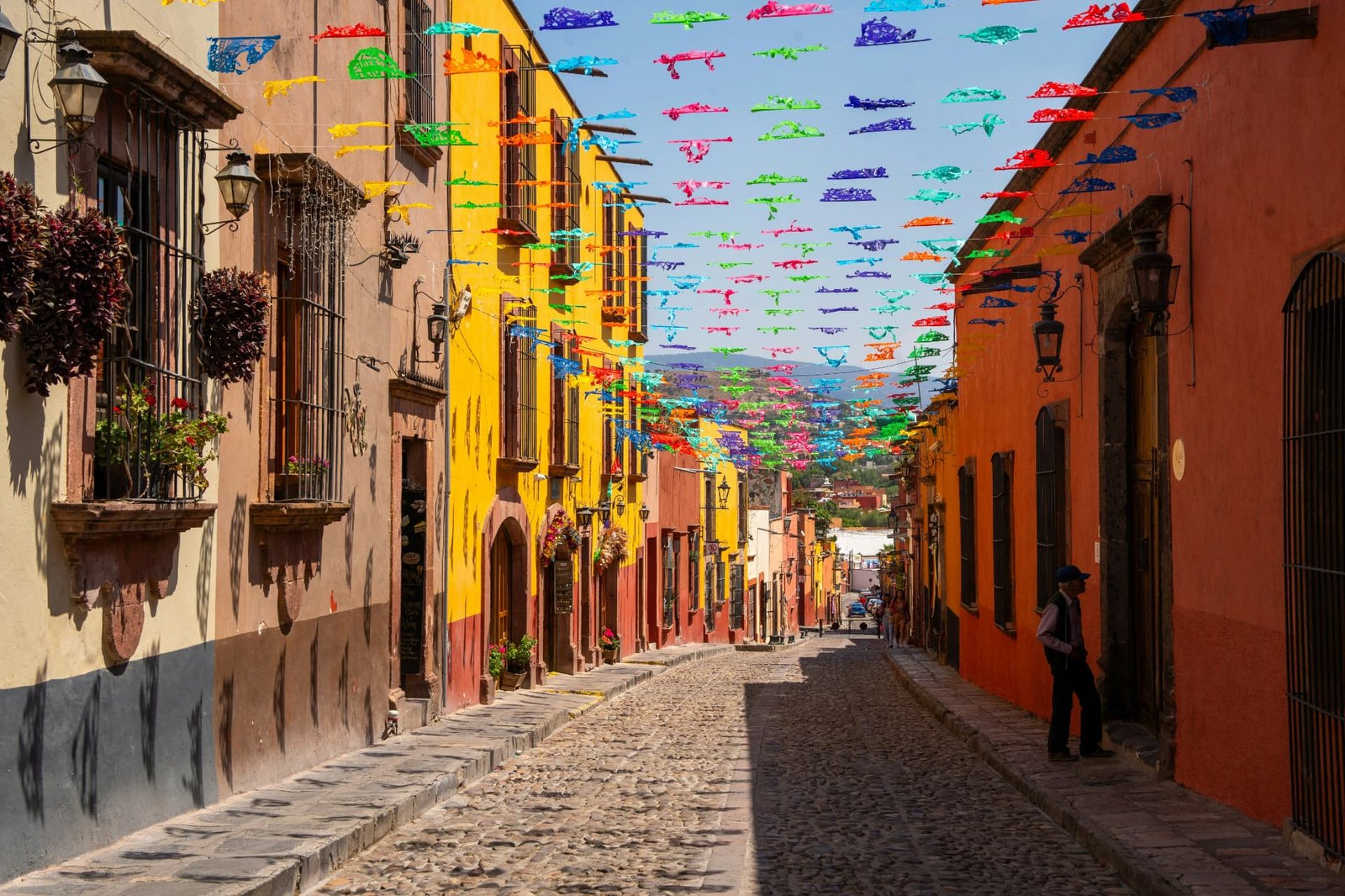
San Miguel is pink stone and high-altitude light. At 6,200 feet the sun lands in a way that makes everything look freshly painted, and the Parroquia presides over the whole town: that neo-Gothic façade the mason Zeferino Gutiérrez raised between 1880 and 1890, working — the story here goes — from postcards and engravings of European cathedrals. Art historians have spent a century arguing about whether it is a blunder or a stroke of genius. It is both, and it is why you can recognize this town in any photograph.

It has been a World Heritage Site since 2008 and it has been taking in artists for sixty years, Mexican first and American later. That has left a town preserved like very few in the country, and also one where you hear as much English as Spanish on the main square. Those are the same story.

This is one of the most expensive places in Mexico and it does not hide it: there are menus priced in dollars and hotels at Western European rates. The share of foreign residents is high and you feel it in the center. And the cobblestones are a serious matter, not a decorative detail: irregular stone on a slope, hard on ankles, on suitcase wheels and on anyone with limited mobility. If what you want is Mexico without a filter, or somewhere inexpensive, Guanajuato city is an hour away and is a very different thing.

Language
Spanish, and as much English as Spanish on the main square
Currency
Mexican pesos (MXN)

When to go

October and November

The rains end, the Bajío stays green and the winter high season has not arrived yet. Mild days and nights that ask for a jacket, which at 6,200 feet is normal all year.

March and April, dry and mild, before the May heat and with the region's jacarandas in bloom.

June through September it rains in the afternoon, in short hard storms. They leave the countryside green and the mornings clear, but wet cobblestone on a slope is more slippery than it looks.

Season or eventWhenWhat it changes
La Alborada4 a.m., on the Saturday of the weekend nearest September 29It opens with the great bell and carries on with a long hour of heavy fireworks over the center. It is spectacular and it is also the loudest thing that happens here all year. We do not give an exact day because the calendar does not decide it: the town publishes the program in early September and the night can land in October, as it did in 2025. If you are sleeping near the square and did not know, you will have no idea what is going on.
Semana Santa and ChristmasMarch or April, and December 20 through January 5The two high seasons. Hotels double, restaurants require reservations and there is nowhere to sit in the center.
Independence daysSeptember 15 and 16San Miguel is the birthplace of Ignacio Allende and the national holiday is felt differently here. Streets close and it fills with Mexican domestic travelers.

On weekends people drive up from Querétaro and Mexico City, so a Tuesday and a Saturday are two different towns. Same advice we give for Cuernavaca and Sayulita, for the same reason.

Getting there

Flights to San Miguel de Allende.

Search flights and fares

From

Houston

IAH

Duration

About 2h 40m

From

Dallas

DFW

Duration

About 2h 45m

From

Los Angeles

LAX

Duration

About 3h 45m

From

Mexico City

MEX

Duration

About 3h 30m

Common routes. Airfares change daily, so we do not fix a price here: search for your dates.

Where to stay

Where to stay in San Miguel de Allende.

See all stays
Consultando disponibilidad real en San Miguel de Allende

First, choose the neighborhood.

Choose the area before the hotel. In San Miguel de Allende, it changes the trip substantially.

El Centro

The ten blocks around the square and the Parroquia. Pink stone, wooden doors and courtyards you cannot see from the street.

A first visit. Everything you came to see is inside this.

Keep in mind: It is the most expensive and the loudest: bells, fireworks and music, and constant cobblestone climbs.

San Antonio

South of the center, residential and with neighborhood life. Bakeries, workshops and the town that works.

Longer stays, and anyone who wants real prices ten minutes' walk away.

Keep in mind: The climb back up to the center is noticeable in the heat and with bags.

Guadalupe

The mural neighborhood, northeast. Street art, artists' studios and much less postcard.

Second visits, and anyone here for the art scene rather than the photograph.

Keep in mind: It changes character block by block and is poorly lit at night. Check the specific street.

Los Frailes and Atascadero

The eastern hills, with large houses, gardens and views over the town and the reservoir.

Anyone here to sit still with a view and who does not mind depending on a car.

Keep in mind: You are outside. Every trip down is a taxi, and at night you have to call one.

Where to eat

Where to eat in San Miguel de Allende, and exactly what to order.

Reference prices per person, in Mexican pesos (MXN).

Breakfast and everyday food

What lasts in San Miguel is in the markets. What is up on the rooftops turns over every season.

Mercado Ignacio Ramírez

Centro, two blocks off the main square$ · 80–180

The municipal market, with its row of fondas at the back and shared tables.

What to order

The set lunch at any of the fondas, which starts around 80 pesos. And the corn gorditas from the stalls by the entrance.

The honest part: This is where the town eats and where you see what things actually cost, a hundred yards from restaurants charging ten times that. Cash only. We do not publish hours because each fonda keeps its own and sources disagree: the good window is between nine and eleven, when the food has just come out.

Lunch

Tacos Don Félix

San Rafael · Fray Juan de San Miguel 15$ · 150–300

Neighborhood cooking in San Antonio, off the center's circuit and at city prices rather than postcard ones.

What to order

The enchiladas tres carnes, which are the house dish.

Hours: Friday and Saturday 1–9 p.m. Sunday 9 a.m.–2 p.m., with breakfast.

The honest part: It only opens Friday through Sunday, so you fit it into the trip rather than the other way round. It is ten minutes on foot from the center, downhill on the way there.

Mercado San Juan de Dios

Colonia San Juan de Dios, west of the center$ · 80–160

The other market, more neighborhood and far less visited than the one downtown. No tour reaches this one.

What to order

Carnitas tacos and chicharrón gorditas, at the food stalls.

The honest part: It is the contrast you need after a day in the center. It is a long walk downhill, and the way back is uphill.

Dinner

El Pegaso

Centro · Corregidora 6$$ · 300–550

Traditional cooking with some international on the side, in a room at street level with no terrace to sell you.

What to order

In season, the chiles en nogada, around 210 pesos and the reason to come between August and September.

Hours: Daily, 8:30 a.m.–10 p.m.

The honest part: Open from breakfast until ten at night, which makes it this guide's fallback for when everything else is closed or full. It is not a discovery, it is a reliable room.

Mezcal. We recommend none of the rooftop restaurants in the center, and that is deliberate. They are San Miguel's most visible offering, the one on every list, and also the one that turns over fastest: menus, owners and names change between one review of this guide and the next. We would rather send you to three places that have been open for decades than to a terrace that may not exist by the time you arrive.

What to do

6 plans, from half a day to a full day.

The Jardín and the Parroquia

The main square and its improbable church. There is no plan to it: sitting on a bench in the late afternoon and watching the town go by is, literally, what everyone here does. The seven o'clock light on the pink stone is behind nearly every photograph you have seen.

An afternoonIn town

Fábrica La Aurora

The textile mill opened in 1902, ran for ninety years and closed in 1991. Today it is a complex of galleries, studios and antique dealers built inside it without stripping out the machinery. It is the best thing in town for understanding why the artists came.

Half a morningIn town

El Charco del Ingenio

The botanical garden above the canyon, with a cactus collection, trails and views back over the town. General admission is 100 pesos and free for children under ten. Go early: there is no shade.

Half a morningTransportation needed

Santuario de Atotonilco

Nine miles out, an eighteenth-century sanctuary with every inch of the interior painted in fresco. It is a World Heritage Site alongside San Miguel and almost none of the people who come to town go and see it.

Half a morningTransportation needed

The hot springs

On the road toward Dolores Hidalgo there are several thermal-water bathing places set among orchards, and it is the plan your knees will thank you for after two days of cobblestones. The two references: La Gruta, with its tunnel through to the hot pool, costs 350 pesos and opens Wednesday to Sunday, 7 a.m.–5 p.m.; Escondido Place costs 300 and opens daily, 8 a.m.–5 p.m. Neither raises its price at the weekend.

Half a dayTransportation needed

Guanajuato city

A long hour away. Alleyways, tunnels running under the city and a university that fills it with young people. It is the opposite of San Miguel in almost every way, which is exactly why the two are worth seeing back to back.

A full dayTransportation needed

Getting around

Getting there

San Miguel has no airport. The nearest is Querétaro (QRO), an hour and twenty by road; the other is Guanajuato-León (BJX), a long hour and a half. From Mexico City, the coach from Central del Norte takes about three and a half hours and is more comfortable than any flight combination: Primera Plus runs about four times a day from around 850 pesos, and ETN about five, with a wider seat. ETN has no fixed fare: they price dynamically, they call it Viajero Anticipado, and buying ahead on their own site is what makes it cheaper — so do not trust whatever figure a search engine showed you. Private transfers from QRO are arranged in advance.

Around town

The center walks end to end, and that is where the good news stops: it is all slope and all irregular cobblestone. Flat shoes and no hurry and it is fine. There are cheap taxis for the climb back up, which is when you appreciate them.

Out of town

Atotonilco, the hot springs and Dolores Hidalgo sit on the same road north and chain together well in a day. Guanajuato city has a direct and frequent bus.

What most guides leave out

The small hours of September 29 are not an emergency.

The feast of San Miguel Arcángel begins before dawn, around four in the morning, with a long hour of heavy fireworks over the center. It is one of the more extraordinary things you can see in Mexico and also the loudest. If you are sleeping near the square that night, either go down and watch it or pick different dates.

The cobblestones are not a charming detail.

These are sloped streets of irregular stone with wide joints and constant changes in level. Heels do not work, thin soles do not either, and a wheeled suitcase is a fight. If you are traveling with someone with limited mobility or with a stroller, check the exact location of your lodging before booking: two blocks is an enormous difference.

You are at 6,200 feet and the sun deceives.

Dry high-altitude air means you do not feel the heat while you are burning, and the nights are cool year-round even after a short-sleeve day. Hat, water, and one more layer than you think.

There are two San Miguels with two price lists.

Inside the same ten blocks you have restaurants with menus in dollars and market fondas with a set lunch for 80 pesos. Both are the town. If you move only by what appears on the lists, San Miguel is among the most expensive places in the country; if you go down to the market, it is a Bajío town.

The bells run the day whether you like it or not.

The Parroquia and the churches in the center ring throughout the day and start early. Add fireworks for any patron saint's day, and there are many. It is part of the place and it is not negotiable: if you are a light sleeper, sleep in San Antonio.

If you only have three days

The shortest itinerary that works.

1

Have breakfast at a fonda in the Mercado Ignacio Ramírez, which also calibrates prices for the rest of the trip. Give the morning to the center with no plan. In the afternoon, Fábrica La Aurora. Come back to the Jardín around seven, when the light hits the pink stone.

2

El Charco del Ingenio first thing, before the sun is on the canyon. Come down to eat at Mercado San Juan de Dios, or at Tacos Don Félix if it is the weekend, which is when they open. Spend the afternoon at the hot springs on the Dolores road.

3

Leave town. Atotonilco in the morning, for the frescoes, and on to Guanajuato city if you still have the appetite for alleys and tunnels. If you would rather stay, the Guadalupe neighborhood and its murals are the San Miguel that does not appear on the postcards.