
Tulum Pueblo
The working town: taquerías, the ADO station and everyday prices.
Travelers who care more about food, cenotes and independence than a sea view.
Keep in mind: The beach is roughly 2.5 miles away, a hot 20-minute bicycle ride.
Calma guide · Quintana Roo
Three places share the name. Only one is in the photographs.
Reviewed · 9 min read
Why here
Tulum is three places using one name. There is the town along Federal Highway 307, where people live and the useful restaurants are. There is the beach road, eight miles of timber and palapa hotels squeezed between the dune and the jungle. Then there is the low forest behind both, cut through by cenotes and underground rivers that were here first.
The sand is still white and the Caribbean is still an improbable blue. What has changed is the cost of reaching it, and how much planning it takes to have a good day there.
Do not come expecting the inexpensive, barefoot Tulum in photographs from a decade ago. Beach-road prices can match Miami while electricity, cell service and road access do not. From spring into fall, sargassum may cover the shore. If the trip is mostly about beach clubs and getting around by taxi, the bill becomes hard to defend. Base yourself in town for tacos and cenotes, however, and Tulum is a different proposition.
When to go
The heaviest sargassum season is usually over, rain is less frequent and mornings can feel cool by Caribbean standards. January brings peak-season rates, but it also gives the beach its best odds.
March, when the water is warmer and before the main sargassum season usually begins.
June through October brings short, forceful downpours, often late in the day. August through October is also hurricane season. A storm does not need to make landfall in Tulum to roughen the sea or close beaches for several days.
| Season or event | When | What it changes |
|---|---|---|
| Sargassum season | Usually April through October, strongest from May through August | Conditions change week by week and beach by beach. Brown algae can collect and decay at the waterline while a stretch a mile away remains clear. Check a same-day local sargassum map before committing to a beach hotel. |
| Christmas and New Year | December 20 through January 5 | Beach-road rates jump and many hotels require five- or seven-night stays. Book for the weather, not for value. |
| Semana Santa | March or April, depending on the year | Mexican holiday traffic fills the coast, and nearby cenotes become crowded by midmorning. |
Outside those dates, ask the hotel directly about rates and cancellation terms. Tulum has had softer occupancy since 2025, particularly in low season, and the first listed price is not always the last one.
Getting there
From
New York
JFK
Airline
JetBlue, Delta and American
Duration
About 4h 30m
Route
Nonstop to Cancún, then about 2 hours by road
From
Miami
MIA
Airline
American
Duration
About 2 hours
Route
Nonstop to Tulum (TQO), then 40–55 minutes to town
From
Dallas
DFW
Airline
American
Duration
About 2h 45m
Route
Nonstop to Tulum (TQO), then 40–55 minutes to town
From
Mexico City
MEX
Airline
Aeroméxico and Volaris
Duration
About 2h 15m
Route
Nonstop to Tulum (TQO), then 40–55 minutes to town
Common routes. Airfares change daily, so we do not fix a price here: search for your dates.
Where to stay
Choose the area before the hotel. In Tulum, it changes the trip substantially.
The working town: taquerías, the ADO station and everyday prices.
Travelers who care more about food, cenotes and independence than a sea view.
Keep in mind: The beach is roughly 2.5 miles away, a hot 20-minute bicycle ride.
A fast-growing district of apartments and small hotels west of town.
Weeklong stays, especially if a kitchen and extra space matter.
Keep in mind: Construction, unpaved streets and poor lighting are still common.
A planned condominium district between town and the beach.
Travelers who want a pool, air conditioning and a middle position.
Keep in mind: It works efficiently, but it feels like a real-estate development because it is one.
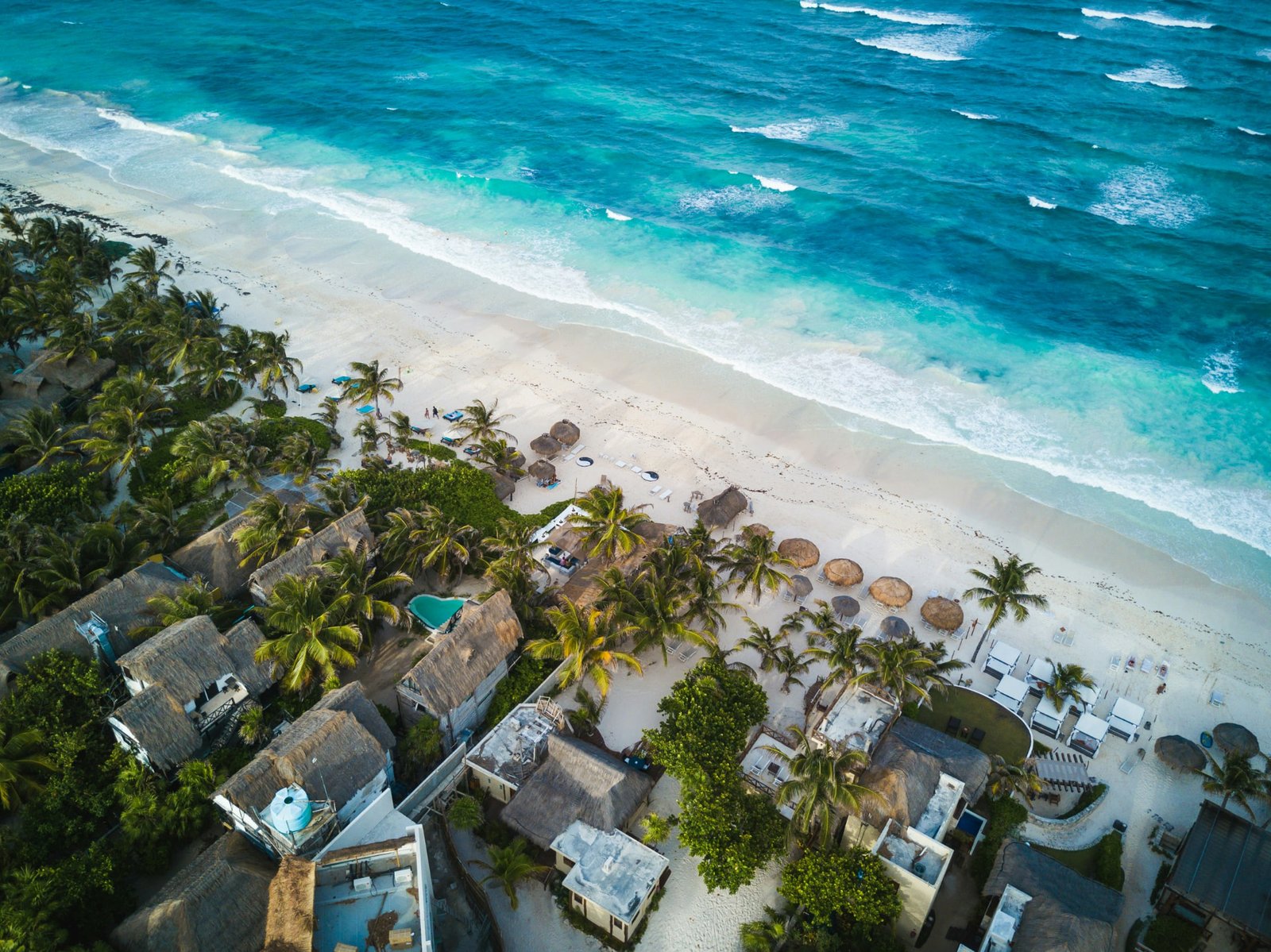
Palapa hotels between the dune and the jungle. This is the postcard.
A short stay built around the hotel, with enough budget to remain there.
Keep in mind: Prices are often in dollars, power may come from solar panels or a generator, cell service is patchy and every trip into town adds a taxi fare.
Where to eat
Reference prices per person, in Mexican pesos (MXN).
Cochinita and lechón cooked overnight and served from early morning.
Cochinita pibil, lechón al horno or poc chuc on handmade tortillas. Ask for the habanero on the side.
Hours: Daily, 6:30 a.m.–3 p.m., or until sold out.
The honest part: The best cuts can be gone by 11 a.m. Bring cash and make this an early breakfast.
A long-running town restaurant with Mexican breakfasts and bottomless activity.
Huevos motuleños in the morning; sopa de lima if you return at night.
Hours: Daily, 7 a.m.–11 p.m.
The honest part: It is the dependable option when newer places are closed, full or between services.
A large, plain seafood restaurant busy with Mexican families at lunch.
Fish ceviche, mixed ceviche or aguachile; a whole fried fish for two.
Hours: Daily, 10 a.m.–10 p.m.
The honest part: The same seafood costs a fraction of beach-road prices. Cards are accepted, but carry cash in case the connection fails.
Straightforward vegetarian and vegan cooking at town prices.
The comida corrida of the day and a green juice.
Hours: Daily, 8 a.m.–10:30 p.m.
The honest part: A useful counterweight to beach-road vegan restaurants charging two or three times more.
There are no beach-road restaurants in this list. That is deliberate.
Al pastor spinning on the trompo and plastic tables on the sidewalk.
Tacos al pastor and a volcán: crisp tortilla, melted cheese and meat.
Hours: Tuesday–Sunday, 4–11 p.m.; closed Monday.
The honest part: It opens at 4 p.m. and fills with town residents after 9. That is the right time to go.
Burritos wrapped in banana leaves, served in a shaded wood-table courtyard.
The cochinita burrito, or chicken al pastor to carry to the beach.
Hours: Daily, 8 a.m.–10 p.m.
The honest part: More polished than a street stand, less expensive than nearly anything on the beach road.
Mezcal. We do not recommend a beach-road restaurant here. Menus and ownership change quickly, prices are commonly in dollars and an annual guide cannot keep up without pretending. The town is the more reliable place to eat, usually for a third of the cost.
What to do
A walled Maya port above the Caribbean. Arrive when the gates open, before the exposed paths become hot and tour groups stack up. The site itself takes about 90 minutes; Parque del Jaguar transport and conservation charges make the full visit longer than the map suggests.
Gran Cenote is convenient and popular. Calavera is close enough to reach by bicycle from town. Dos Ojos is farther north and better suited to a longer snorkel. Go before 10 a.m., carry pesos and shower before entering. Skip sunscreen altogether in the water, including products marketed as reef-safe.
This quieter side of the biosphere reserve combines a small Maya site, a wooden lookout above the forest and a float through a freshwater channel. It is a more manageable day than the long, rough road to Punta Allen.
An inland Maya city about 45 minutes from Tulum. Paths run through the forest between groups of stelae, and renting a bicycle is the practical way to cover them.
Playa Paraíso and Playa Ruinas are public, but access can involve park fees and transport. During rough weather or heavy sargassum, authorities may close a section without much notice. Check the same-day beach report before paying for a taxi or committing the afternoon.
Getting around
Compare Tulum airport (TQO) with Cancún (CUN), not just the airfare. TQO is closer on a map but sits south of town; the ADO bus generally takes 40–55 minutes and authorized taxis are expensive. CUN has far more flights and competition, but the road trip is closer to two hours when traffic is kind. A slightly higher fare into TQO can still cost less after ground transportation.
The distance is about 2.5 miles. Bicycles are common and there is a path for much of the way, though midday heat makes the ride harder than it looks. Taxis have no meter: agree on the total in pesos before getting in, every time.
Colectivos leave from the main avenue near the ADO station and can drop you along Highway 307. Ask the driver whether your stop requires a long walk from the highway. Muyil and Cobá are manageable without a rental car; Punta Allen is not.
What most guides leave out
Brown algae usually arrives in waves from April through October. It can pile up and smell as it decays, but conditions differ sharply along the coast. Check a daily beach map and book flexible cancellation during those months.
Some businesses quote in dollars and cash-only terminals carry poor exchange rates and high fees. Withdraw pesos from a bank ATM in town, decline the machine’s currency conversion and confirm prices before ordering or entering a taxi.
Many properties rely partly on generators or solar power. Air conditioning may run only at set hours, and mobile service is inconsistent. If you must work, ask for the policy in writing or stay in town or Aldea Zamá.
Mexico’s shoreline is public, but park access, transportation, parking and beach furniture can still cost money. Ask what a charge covers; a daybed minimum is not an entrance fee to the sand.
Cenotes are freshwater openings into a connected underground system. Most operators ask visitors to shower first, and even biodegradable lotions introduce residue. Use shade and a rash guard, then apply sunscreen after swimming.
If you only have three days
Eat cochinita at Taquería Honorio before 9 a.m., then enter the archaeological zone when it opens. Use the afternoon for whichever beach has the cleanest same-day report. Return to town for al pastor at La Chiapaneca after 9.
Make it a cenote day. Pair Gran Cenote with Calavera by bicycle, or spend longer snorkeling at Dos Ojos. Carry pesos and go before the tour vans arrive. Have a late seafood lunch at El Camello Jr.
Leave the hotel corridor behind. Choose Muyil for the Sian Ka’an channel and forest lookout, or Cobá for a bicycle ride among Maya structures. Both make sense from town and both explain the peninsula better than another beach club.