
Valle de Bravo

Calma guide · Estado de México

Valle de Bravo

Pine forest, red tile roofs and a lake that is actually a reservoir.

Reviewed · 8 min read

Why here

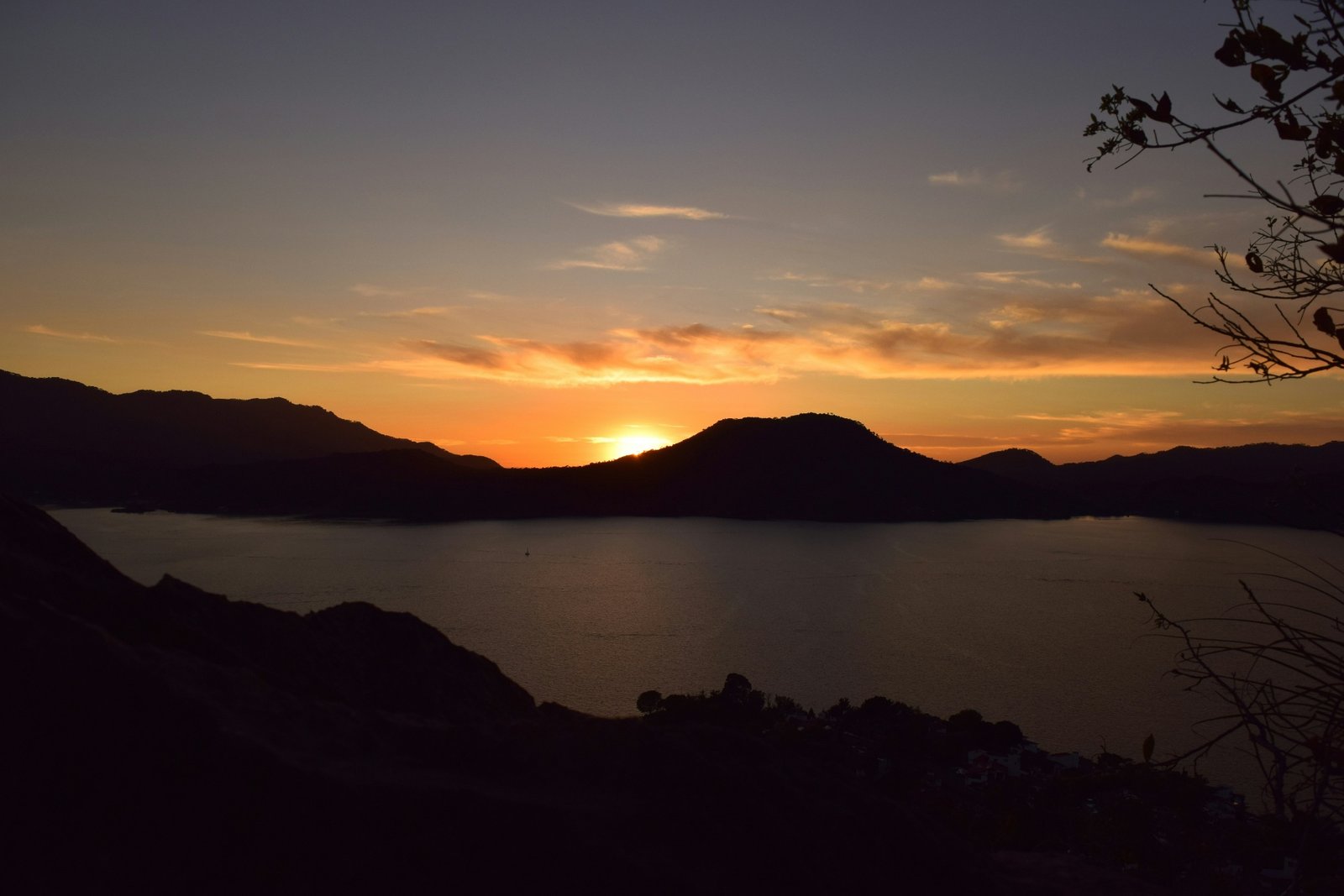
Valle is a town of white houses and red tile, set in an amphitheater of pine forest at 5,900 feet, with the water below and the hills all around. From the La Peña lookout you understand it in one glance: the town on the slope, the sheet of water filling the valley and sailboats crossing it end to end.

It has been Mexico City's weekend escape for half a century, and that has left two towns stacked on each other: the one with cobblestone streets and a market, and the one of weekend houses in Avándaro, with its golf course and its private pine woods. You can see both from the same lookout and they almost never touch.

On a weekend this is neither cheap nor quiet: from Friday afternoon through Sunday, Mexico City money comes up and brings prices, highway traffic and the noise of jet skis on the water with it. And the lake is not a lake — it is a water-supply reservoir with documented sanitation problems. If you are coming to swim without thinking about it, this is not your place. If you are coming for the forest, the air and the trout, it works very well.

Language
Spanish
Currency
Mexican pesos (MXN)

When to go

November through March, midweek

This is the dry season: clear skies, cold mornings and the stable conditions that make this a year-round paragliding town. It also overlaps with the monarchs at Piedra Herrada, which is the strongest seasonal reason the area has.

July and August, if what you want is the forest at its best. It rains in the afternoon but the green is unlike any other time of year.

June through September it rains most afternoons. Mornings stay clear and the pines smell like wet earth, but the road down from Toluca gets slow and foggy.

Season or eventWhenWhat it changes
WeekendsFriday afternoon through Sunday, all yearNot a festival, but the thing that changes the town most. Lodging prices rise, there are lines at the restaurants downtown, and the highway from the capital jams on Friday afternoon and again on Sunday afternoon.
Monarch butterfly seasonMid-November through March 31Piedra Herrada fills on the weekends of those months. Conanp decrees the opening each year and it lands around mid-November — in the 2024-2025 season it was the 15th — so the exact day comes with their bulletin in early November. The March 31 close is fixed with no extension: outside those dates the sanctuary has nothing to show you.
Semana Santa and the Christmas breakMarch or April, and December 20 through January 5The two most expensive and most crowded weeks of the year. The town saturates and you should book months ahead.

The day of the week matters as much as the month, same as in Cuernavaca, Sayulita and San Miguel. A Tuesday in February in Valle is a mountain town; a Saturday in February is something else.

Getting there

Flights to Valle de Bravo.

Search flights and fares

From

Mexico City

MEX

Duration

About 2 hours

From

Los Angeles

LAX

Duration

About 4h 15m

From

Dallas

DFW

Duration

About 2h 45m

From

Madrid

MAD

Duration

About 12 hours

Common routes. Airfares change daily, so we do not fix a price here: search for your dates.

Where to stay

Where to stay in Valle de Bravo.

See all stays
Consultando disponibilidad real en Valle de Bravo

First, choose the neighborhood.

Choose the area before the hotel. In Valle de Bravo, it changes the trip substantially.

The town center

Sloped cobblestone streets, white houses with tile roofs, the zócalo and the market. Everything walkable is here.

A first visit, and anyone who does not want to depend on a car.

Keep in mind: It is a constant climb, and on a weekend it is where all the noise and all the people concentrate.

The lakefront

The strip between town and water, with the dock, the floating restaurants and the terraces with a view.

Anyone here for the water who wants to get out on it without driving first.

Keep in mind: It is the most touristed part and the one whose prices swing most between midweek and weekend.

Avándaro

The residential pine woods to the south, with weekend houses, a golf course and streets without sidewalks.

Anyone here to be in the forest who does not mind driving for everything.

Keep in mind: You are ten or fifteen minutes from town and nothing is walkable. It is very dark at night.

The hills and Monte Alto

The slopes above, with cabins among pines and the views that end up in the photos.

Anyone who would rather have forest and silence than be near anything.

Keep in mind: Some stretches are dirt road. In the rain you want a high vehicle, and at night there are no lights.

Where to eat

Where to eat in Valle de Bravo, and exactly what to order.

Reference prices per person, in Mexican pesos (MXN).

Breakfast

Municipal market

Center · Calle Independencia$ · 80–180

The town market, with its food floor and the wood-oven bread stalls by the entrance.

What to order

Pan de leña straight out of the oven and some esquites. If you want something heavier, carnitas or a pambazo.

Hours: The food section, daily 8 a.m.–7 p.m.

The honest part: It is the cheapest and most local thing in a town that has gotten expensive. Cash only, and each stall adjusts its hours within that window.

Lunch

The dish here is rainbow trout, farmed in the valley and the thing that defines the local cooking.

Los Veleros

Center · Fray Gregorio Jiménez de la Cuenca 194$$ · 400–700

Open for more than two generations and the town's reference for a sit-down meal, with international cooking on a Spanish accent and a view of the lake.

What to order

The rainbow trout, which is what you came to try. And the onion soup to start, which has a reputation of its own.

The honest part: This is where everyone goes and on a weekend you feel it, with a wait at the door at lunchtime. We do not publish hours because no source publishes them: if you go midweek, call ahead.

Los Pericos

Embarcadero Municipal · Terminación del Salitre s/n$$ · 350–650

A floating restaurant out on the water, with the view the setting promises.

What to order

The trout stuffed with seafood and four cheeses, which is the signature dish.

Hours: Monday and Tuesday 9 a.m.–6 p.m. Thursday through Sunday 8 a.m.–8 p.m. Closed Wednesday.

The honest part: You come to be on the water as much as for the menu. It closes Wednesdays and on a weekend there is a wait; the boat noise is part of the deal.

Paraíso

Center · Fray Gregorio Jiménez de la Cuenca s/n$ · 250–400

Mexican and regional cooking, family-run and unpretentious, facing the water.

What to order

The trout in butter or with mojo de ajo, around 250 pesos and served with rice and salad. On Saturday and Sunday they run a breakfast and lunch buffet.

The honest part: It is the reasonably priced option with a view, which is rare in Valle. We do not publish hours because only the weekend buffet is confirmed. Do not expect chef cooking: this is a well-made Sunday lunch.

What to do

6 plans, from half a day to a full day.

Get out on the water

Sailboat, launch or paddleboard from the dock. It is the plan that explains the town, and it is best first thing, when the water is flat and the jet skis are not out yet.

Half a morningIn town

Paragliding

Valle is one of the best free-flight sites in the world thanks to its stable thermals, and it flies year-round. Launch is at Monte Alto and a tandem runs 1,700 to 2,000 pesos depending on what is included: around 1,700 buys twenty minutes with video and transport, and around 2,000 buys most of a morning with a tour of the reserve, insurance and park entry. Compare what is in the price before booking, because that is where the difference sits.

Half a morningTransportation needed

Piedra Herrada sanctuary

One of the monarch butterfly sanctuaries, about 45 minutes from town on the road toward Temascaltepec. Admission is 150 pesos for adults and 100 for children, open Monday to Friday 9 a.m.–3 p.m. and weekends from 8. You go up on foot or on horseback, and it is a real climb.

Check before leaving: The season opens in mid-November and closes on March 31. Outside those dates there is nothing to see: it is the most common planning mistake in the area.

Half a dayTransportation needed

La Peña

The crag above town, with the view that sums the place up: houses, water and forest in a single look. It is a stepped climb and takes a long hour. At sunrise, with fog in the valley, is the moment.

A long hourIn town

Velo de Novia waterfall

A falls in the forest just outside town. It is a short walk and pairs well with the drive out toward Avándaro.

Half a morningTransportation needed

The center and the market

The zócalo, the parish church and the cobblestone streets around them. No plan required, and welcome after a day on the water or in the forest.

An afternoonIn town

Getting around

From Mexico City

About 95 miles and roughly two hours, on the Toluca highway and then the road down into the valley. By coach, Autobuses Zinacantepec leaves the Observatorio terminal hourly from 6 a.m. to 7:30 p.m.: the Excelencia Plus direct takes a little over two hours and runs around 278 pesos, while the Zina-bus with stops stretches to three and a half hours for about 251. Pay for the direct. Friday afternoon and Sunday afternoon are the worst windows: three-plus hours happens easily.

Around town

The center walks, but it is all cobblestone slope and the trip down from the zócalo to the dock is far faster than the trip back up. There are cheap taxis for the return.

To Avándaro, the falls and the sanctuary

Everything outside the old town needs a car or a taxi: there is no transit network built for visitors. For Piedra Herrada most people hire the transfer or drive, and it pays to leave early.

What most guides leave out

The lake is not a lake, and the triathlon stopped swimming in it.

It is the Valle de Bravo reservoir, part of the Cutzamala system that supplies about a quarter of the drinking water for Mexico City and its metropolitan area. The level rises and falls a great deal from year to year with the drought, so the shoreline you saw in a photo may not be where you think. On water quality there is no clean answer, there are two official versions at odds: in July 2026 Conagua denied that any sewage was being discharged into the reservoir and stated that its six pumping chambers were operating to standard, while the Valle de Bravo municipal government was publishing that those same chambers were out of service. No authority has issued a swimming ban. What is verifiable is that the Valle de Bravo triathlon dropped its swim leg over fecal bacteria in the water. Sailing, paddling and flying over the reservoir are normal here; getting in to swim is a decision worth making with all of that in hand.

The town changes completely with the day of the week.

Friday afternoon through Sunday, the capital comes up and brings lodging prices, lines and jet-ski noise with it. Monday through Thursday you get a mountain town for considerably less money. If you have the choice, do not hesitate.

The monarchs have an expiration date.

The season at Piedra Herrada runs November through the end of March and stops there. It is the most common planning mistake in the area: people arriving in April or May expecting to see them. Check the official dates for the year before organizing a trip around it.

You are at 5,900 feet and the forest is cold at night.

Daytime can be short-sleeve sun and the temperature drops sharply after dark, especially November through February and especially if you are sleeping up in the hills or in Avándaro among the pines. A fireplace and one more layer than you think.

The Sunday afternoon drive is a plan in itself.

Two hours if you pick the hour well, and considerably more if you leave when everyone else does. Driving back on Sunday mid-afternoon is the worst possible call: either go before lunch, or stay through dinner and drive down at night on an empty road.

If you only have three days

The shortest itinerary that works.

1

Arrive midweek and climb La Peña first thing, when there is fog in the valley and you understand the place in one look. Come down into town with no plan: the zócalo, the cobblestone streets and the market. Trout at Los Veleros, and give the afternoon to the town.

2

The water and air day. Get out on the lake early, sailing or on a paddleboard, while the water is flat. Then a paragliding flight from Monte Alto, which runs year-round here. Lunch out on the water at Los Pericos.

3

If you are here between November and March, Piedra Herrada first thing: entry, climb and monarchs. If not, trade it for the Velo de Novia falls and a loop through the pines of Avándaro. Head back to the capital before lunch or after dinner, never mid-afternoon.