
Valle de Guadalupe

Calma guide · Baja California, Mexico

Valle de Guadalupe

Dirt roads between vineyards, with five Michelin stars at the end of them.

Reviewed · 10 min read

Why here

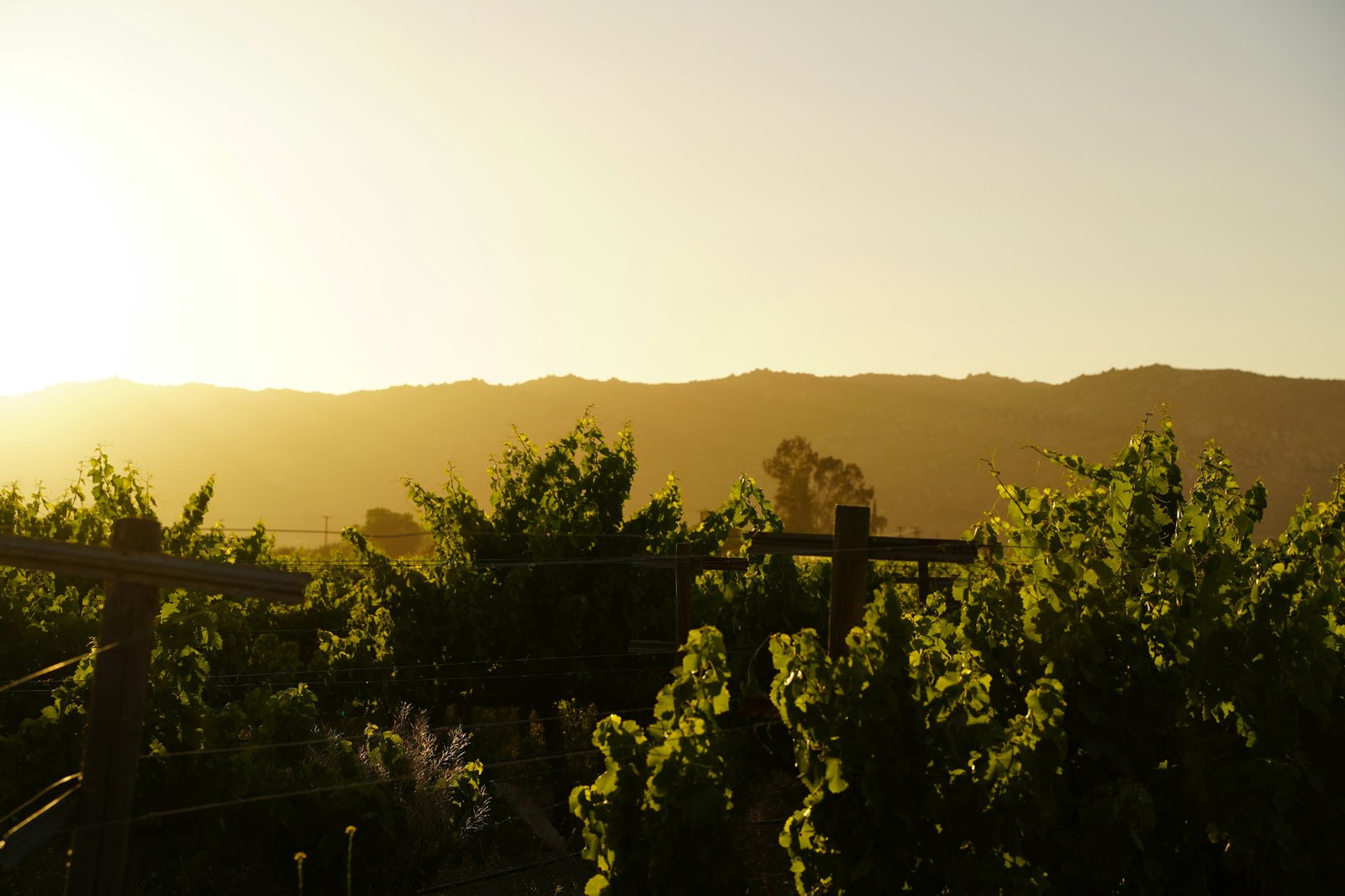
An hour and a half south of the border, in a dry valley in Baja California, most of Mexico's wine gets made. And there is no town: there is a highway, Federal 3, and off it run dirt roads to wineries, to hotels of considerable architectural ambition, and to open-air dining rooms under oak trees. The wine route is not a street you follow, it is a network of dirt tracks you choose from.

In that valley without a single sidewalk there are now five Michelin-starred restaurants. The guide reached Mexico in 2024, and in the edition presented in May 2026 Valle de Guadalupe took five stars, more than anywhere else in the northwest. You eat here as well as almost anywhere in the country, nearly always outdoors and nearly always with the vines in front of you.

There is no town, no center to walk, and no public transport: everything is kilometers from everything else, down dirt roads, and the activity is drinking. Those two sentences together are the central problem of this valley, and it has to be solved before you arrive — with a driver, or with someone who is not drinking. The prices are not Mexican either: a tasting runs 200 to 800 pesos a head, pairing flights go past 1,500, and the design hotels charge California rates. If what you want is a town with a plaza to stroll after lunch, this is not it: Ensenada is half an hour away and it is.

Language
Spanish, with a great deal of English: half the valley lives off Californian visitors
Currency
Mexican pesos (MXN). Many wineries and hotels also quote in US dollars

When to go

September to November

The Vendimia has passed and taken the crowds with it, the actual harvest is in, and the valley settles into warm days, cool nights and vines turning color. It is also when the wineries have time to look after you properly, which in August they do not.

April and May, with the valley still green from the winter rain and before the heat arrives. It is when the seasonal dining rooms open.

A dry Mediterranean climate: little rain, and almost all of it between December and March. Summer is hot and bone dry, and it is worth knowing this is a semi-arid valley, not rolling countryside. See the note on water in the practical section.

Season or eventWhenWhat it changes
Fiestas de la VendimiaAugust. The 36th edition, in 2026, runs the 5th to the 30thThe event of the year, run by Provino Baja California: 80 wineries, more than 160 labels, some fifty restaurants and around ninety thousand visitors across three weeks. Lodging sells out months ahead and prices climb. Either you come for it, or you come in another month.
WeekendsAll year, Friday to SundayHalf of San Diego and half of Tijuana come up. The wineries fill, the good dining rooms have no table without a booking, and the dirt roads load with cars. Midweek is a different valley, and the tastings happen unhurried.
Holy WeekMarch or April, depending on the yearDomestic tourism en masse and the whole Baja coast full. In the valley it shows mostly on the roads and in table availability.

The Vendimia cuts both ways, like the Cervantino in Guanajuato: it is the best reason to come and also the worst week to come if that is not why. Decide before you look at flights.

Getting there

Flights to Valle de Guadalupe.

Search flights and fares

From

Mexico City

MEX

Duration

3h 40m

From

Los Angeles

LAX

Duration

1h 20m

From

New York

JFK

Duration

5h 30m

From

Madrid

MAD

Duration

11h 00m

Common routes. Airfares change daily, so we do not fix a price here: search for your dates.

Where to stay

Where to stay in Valle de Guadalupe.

See all stays
Consultando disponibilidad real en Valle de Guadalupe

First, choose the neighborhood.

Choose the area before the hotel. In Valle de Guadalupe, it changes the trip substantially.

Francisco Zarco and the Federal 3 corridor

The closest thing the valley has to a center: the highway, the Museo de la Vid y el Vino, a gas station, and the large wineries on either side.

For a first visit, and for anyone who wants asphalt under them rather than depending on dirt roads for everything.

Keep in mind: It is the busiest and least charming stretch of the valley. You sleep near everything, but you do not sleep in the countryside.

The heart of the valley

The dirt roads running north, where the boutique wineries, the architectural hotels and the dining rooms under trees are. This is the postcard.

For anyone here for the wine and the architecture, who wants to wake up among vines.

Keep in mind: Dirt roads both ways, by day and by night. In a low car, after dark, it is genuinely uncomfortable.

San Antonio de las Minas

The southern end of the valley, closest to Ensenada, with wineries and dining rooms spread along the road.

For anyone splitting the trip between valley and coast without changing hotel twice.

Keep in mind: You are on the edge: the northern wineries are half an hour of dirt away.

Ensenada

The port city half an hour south, with hotels at every price, seafood, and streets you can walk. It is not the valley, and that is the point.

For anyone unwilling to pay valley prices, anyone travelling without their own car, and anyone who would rather have dinner and walk home.

Keep in mind: Half an hour of road each day, and that half hour has to be driven back after a tasting. A driver, same as inside the valley.

Where to eat

Where to eat in Valle de Guadalupe, and exactly what to order.

Reference prices per person, in Mexican pesos (MXN). Many wineries and hotels also quote in US dollars.

Lunch among the vines

Lunch here is the long meal, which is how the valley works. Both need booking days ahead, and weeks during the Vendimia.

Deckman's en el Mogor

Tecate–Ensenada highway, km 85.5, San Antonio de las Minas$$$ · 900–1600

Drew Deckman's live-fire kitchen, set up outdoors inside the Mogor vineyard with its own kitchen garden alongside. It holds a Michelin green star for how it works with produce.

What to order

The oysters, the quail and the grilled octopus, the three dishes it is known for. Everything goes over fire, and that is what you came to watch.

Hours: Thursday to Monday, 1pm to 7.30pm. Closed Tuesday and Wednesday.

Official website

The honest part: It is genuinely open-air: in summer you eat in the heat and in winter in the cold, and that is part of the place. They themselves recommend booking two to three weeks ahead. The hours we give are from their own site; the Michelin listing publishes an hour later for closing, and in doubt we take theirs.

Finca Altozano

Tecate–Ensenada highway, km 83, Ejido Francisco Zarco$$ · 500–900

Javier Plascencia's big grill, on a long terrace with the vineyards in front and old barrels turned into booths. It is most people's way into the valley.

What to order

Kumiai oysters to start and the grilled octopus, which is the house dish. The beef cheek tacos if there are a few of you.

Hours: Tuesday to Thursday 1pm to 8pm, Friday and Saturday 1pm to 9pm, Sunday 12pm to 8pm. Closed Mondays.

Official website

The honest part: It is the busiest and loudest on this list, and at weekends you feel it. It is also the easiest to get right if it is your first meal here. You book through their site; they do not call it compulsory, but at weekends it is in practice.

Dinner in the valley

Animalón

Tecate–Ensenada highway, km 83, Ejido Francisco Zarco

Javier Plascencia's dining room, chef and owner, with Óscar Torres as executive chef, set beneath an oak more than two hundred years old. Michelin-starred. An eight-course tasting menu built on seafood and the garden, with the pairing charged separately.

What to order

The tasting menu, which is the only thing there is and what you came for. The pairing with valley wine is charged separately and earns its place.

Hours: Wednesday to Sunday. Wednesday and Thursday 3pm to 7pm, Friday 1pm to 7pm, Saturday 1pm to 8pm, Sunday 1pm to 7pm.

Phone: +52 664 375 2658Official website

The honest part: What almost nobody flags: it moves with the season, it does not close. In 2026 it served from February to early May at Casona Animalón, on Finca La Divina, and returned under the oak on May 8. Before building a trip around this dinner, confirm with them which of the two houses they are in. We publish no price: the one circulating comes from their autumn 2025 carte and they do not publish the current one. Online booking runs to six people; for more you have to write to them.

Fauna

Inside the Bruma project, down a dirt road off Federal 3$$$ · 1200–2000

David Castro Hussong's cooking and Maribel Aldaco Silva's pastry, at communal tables in the open air. A Michelin Bib Gourmand, which is the good-value category.

What to order

The tasting menu, which turns with the season and is the whole point. There is no fixed carte worth ordering piecemeal.

Hours: 1pm to 8pm, and until 9pm on Fridays and Saturdays.

The honest part: The tables are shared and that is deliberate: if you want dinner alone together, this is not it. Book properly in advance, and note it sits inside Bruma, so the access road is dirt. We give no closing day because they publish none: ask when you book.

Prices per person, in pesos, without wine and before tip. And the star list, in case you want to chase the ones we do not describe: in Valle de Guadalupe, Animalón, Conchas de Piedra, Damiana, Lunario and Olivea Farm to Table hold Michelin stars. Of the green stars, which reward sustainability, we name only the ones we could confirm in the current edition: Lunario, which holds both, and Deckman's en el Mogor.

What to do

5 plans, from half a day to a full day.

The wineries, with judgment and a booking

There are more than a hundred producers, and visiting all of them is not a plan, it is a race. Three a day is the sensible maximum and two are more enjoyable. Tastings run 200 to 800 pesos a head depending on the winery, and full pairing experiences go past 1,500. The boutique places almost always want a booking, especially May to November, while some of the big ones take midweek walk-ins. Call ahead: published hours and real hours do not always match here.

A day per two or three wineriesTransportation needed

Museo de la Vid y el Vino

On Federal 3, in Francisco Zarco. It tells how the vine reached Baja California, from the missions to today's industry, and it is the half hour that makes the next day's tastings make sense. It is also the only thing in the valley you visit without a booking and without drinking.

Half a morningTransportation needed

The valley's Russian history

The valley was settled in the early twentieth century by Molokan families, Russian dissenters from the Orthodox church who arrived fleeing persecution, and the surnames and the gabled adobe houses come from them. A small community museum tells that story, and explains why this does not look like the rest of Baja.

An hourTransportation needed

Going down to Ensenada

Half an hour south, and the counterweight the valley needs: seafood at real prices, La Bufadora, and a city you can walk. The fish tacos and seafood tostadas here are the other heritage of this region, and they cost a fraction of anything in the valley.

A dayTransportation needed

Not driving

Worth stating as a plan rather than a warning. The right way to do this valley is to hire a driver for the day, which is an ordinary, established service here, and forget the car. It costs about what two tastings cost, and it solves the destination's only serious problem.

The whole tripIn town

Getting around

Getting here from the border

From Tijuana it is about 125 kilometers and an hour forty on Federal 3. From San Diego, the route most people recommend is not San Ysidro but Tecate: I-8 east, then the 94 south, cross, and forty-five minutes on Federal 3. Around two hours door to door including the crossing, which at Tecate usually runs ten to twenty minutes against the queues at San Ysidro. The Tecate crossing is open 5am to 11pm, so a late dinner in the valley will not get you back across that night.

Inside the valley, a driver

There is no public transport, no taxis circulating, and the distances between wineries are kilometers of dirt road. There are designated-driver and private transport companies that do nothing else: they collect you, run whatever itinerary you want, and bring you back. It is the obvious answer and everyone who knows what they are doing uses it.

If you are going to drive anyway

Let the driver be whoever is not drinking, and make that decision before the first tasting rather than during the third. A car with some clearance, because the dirt has potholes and dips. And at night the roads have no lighting and no signage: note your turnings while it is still light.

What most guides leave out

The activity is drinking and there is no way to move without a car. Solve it first.

It is the only serious problem this destination has, and it has a known answer: a designated driver for the day. There are companies that do nothing else, they will build the itinerary, and it costs roughly what two tastings cost. Without a car you reach nowhere, and with a car and three tastings in you should not be on unlit dirt roads. This is not a moral point: the valley is simply built that way.

The aquifer has been under a drilling ban since 1965 and is still in deficit.

Yes, and it is the region's most serious conversation. Conagua publishes the file for the Guadalupe aquifer, reference 0207, and the numbers are there: an average annual recharge of 18.8 million cubic meters against 36.66 million committed, leaving an average annual availability of minus 17.96 million. In deficit, in those words and signed. The whole valley has been under a drilling ban since a 1965 decree and remains so. One nuance matters, because these figures get quoted badly: those 36.66 million are volume committed in concessions and administrative uses, not water pumped, and Conagua's own hydrological balance calculates a considerably smaller physical extraction. The 2026 Vendimia was convened under a banner of sustainable viticulture and wine tourism. Both things are true at once, which is why we print it: not so you stay away, but so you know where you are and do not ask for fresh towels daily.

Almost everything needs booking, and some places change house with the season.

Yes, and further ahead than you would think. Deckman's recommends two to three weeks, the starred dining rooms fill just as far out, and the boutique wineries want appointments. And one detail catches people out: Animalón serves under its oak in the warm season and in the cold months moves the service to another house, so confirm where they are before buying flights. Turning up without a plan on an August Saturday is how you drive the whole valley without eating anywhere.

The customs exemption covers one liter of alcohol every thirty days.

The $800 personal exemption can include up to one liter of alcohol per person over twenty-one, once every thirty days. Mind the nuance, because it gets told wrong constantly: that is not an absolute import cap. You can bring more by declaring it and paying duty, and if the quantity looks commercial the officer can treat it as such. It is still the rule that matters for anyone driving down from California to buy cases: shop with it in mind from the first winery, not the last.

There is no town, and that changes the logistics of everything.

Not really. There is a highway with a few services at Francisco Zarco and little else: a gas station, a couple of shops, the museum. There is no all-hours pharmacy, no ATMs everywhere, and no center to walk after dinner. Bring cash, bring your medicines, and do not count on buying anything at nine at night.

It is an expensive destination and worth knowing before you book.

Quite, and not at Mexican prices. Tastings run 200 to 800 pesos a head and pairing flights pass 1,500. A starred dinner runs around 3,000 a head before wine. The design hotels charge California rates. It can be done cheaper by sleeping in Ensenada and choosing large wineries over boutique ones, but this is not a budget destination and does not pretend to be.

If you only have three days

The shortest itinerary that works.

1

Cross at Tecate if you are coming from California, and arrive for lunch rather than dinner. Start at Finca Altozano, with the Kumiai oysters and the grilled octopus and the vines in front of you, which is the best possible introduction. In the afternoon, one winery, unhurried, and the Museo de la Vid y el Vino if the light holds.

2

The big day, with the driver hired beforehand. Two or three wineries in the morning, by appointment, alternating a large one with a boutique. Eat over fire at Deckman's en el Mogor, with the quail and the oysters, and note it closes Tuesday and Wednesday. Dine at Animalón, under the oak or in whichever house they have moved to that season, booked weeks ahead.

3

Go down to Ensenada, which is the counterweight: seafood at real prices, tostadas at the market, and a city you can walk after three days of dirt road. If you would rather stay, swap it for Fauna at the communal tables and one last winery. And remember the one-liter limit if you are crossing back.