Algarve
PTAlgarve2026

Calma guide · Southern Portugal

Algarve

Cliffs to the west, lagoon to the east, and the Algarve that will not fit on an Albufeira postcard.

Reviewed · 11 min read

Share
Photo · Francois Olwage / Unsplash

Share this guide

When you send the link, a card shows the photo, the headline and calma.travel.

Why here

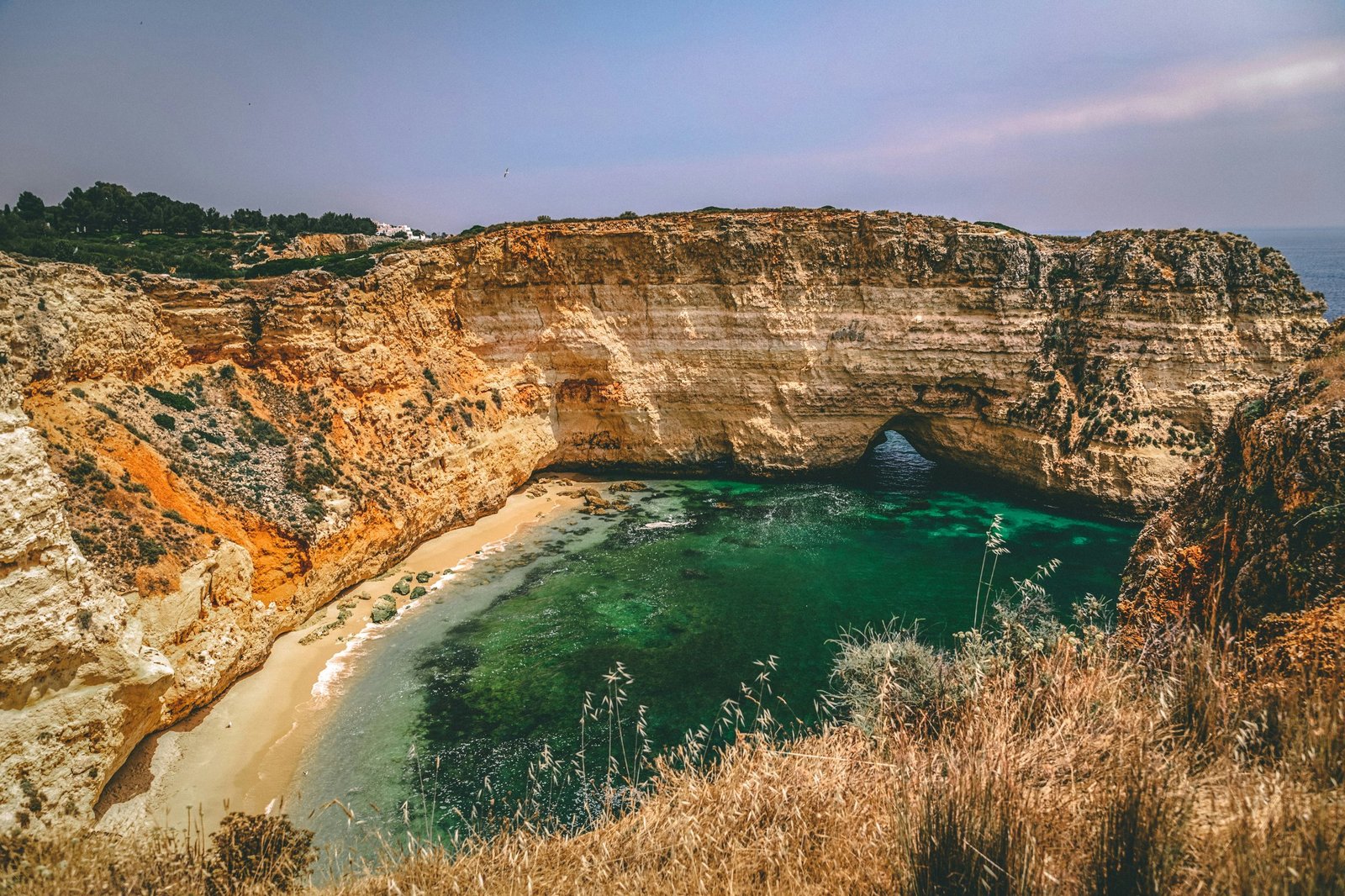
The Algarve that usually gets sold is a resort strip between Faro and Portimão: golf course, happy hour and the same hotel-umbrella beach. Farther west the coast changes character. In Lagos, ochre cliffs drop into narrow coves; in Sagres the Atlantic arrives head-on and the wind does not ask permission; on the Costa Vicentina the natural park cuts off sprawl and leaves long beaches where the swell comes in whole. At the other end, in Olhão, Ria Formosa opens a maze of barrier islands, marsh and a fish market at first light.

This guide stays with that Algarve: the cape, the Serra de Monchique and the lagoon. It does not ignore Benagil or the fame of the sea caves — it names them with the boat queue included — but it will not send you to Albufeira looking for quiet. If you want clear water with fewer people than the brochure promises, the west and the Vicentina edge are the stretches that still hold up.

If you want all-inclusive, entertainment and late nights out, Albufeira and the central strip are already built for that and this guide will not improve your evening. If you hate driving, the west gets awkward: between Lagos, Sagres, the Vicentina beaches and Monchique the distances need wheels, and public transport arrives late or not at all. In July and August the whole coast fills — Sagres too — and Benagil stops being a cave and becomes a floating queue. And if what you want is a walkable city with a different dinner every night and no logistics, Lisbon or Porto give you that; here the plan is built in stretches of coast.

Language
Portuguese. English is widely spoken on the tourist coast; Spanish is only half-understood near the border
Currency
Euros (EUR)

When to go

May, June and the second half of September

The sea is already usable, temperatures are high without August’s oven, and the west coast can still be driven without fighting for every parking space at Ponta da Piedade. In September the water stays warm and many European families have already gone back to school.

Late April and October: cooler, windier in Sagres, lower rates and low light on the cliffs. Ideal if you care more about walking and eating than long swims.

Mediterranean climate with an Atlantic edge: June to August barely rains; November to February holds most of the rain and the western storms. On the Costa Vicentina, winter swell is for surfers, not sunloungers. Spring and autumn bring clear days broken by fronts — pack a light layer even when the forecast says 22 °C.

See the month-by-month calendar →

Season or eventWhenWhat it changes
Holy Week and April bridge daysMarch or April, depending on the yearPortugal and much of Spain move to the coast. Lagos, Sagres and the Benagil coves fill; lodging in the west rises and it pays to book weeks ahead.
High summerJuly and AugustThe whole coast in its densest, most expensive form. Even «quiet» Vicentina beaches have full car parks by mid-morning. If you can choose, this is not the month for this guide.
Christmas and New Year20 December to 2 JanuaryLess beach, more winter house: many seasonal restaurants close or cut days, but Lagos and Faro stay alive. The Atlantic is cold; Monchique and walks gain weight.
Loulé CarnivalFebruary, movable datesOne of the country’s big carnivals, in the central Algarve. Not the focus of this guide, but it fills hotels inland and around Faro those days; if you pass through, expect traffic and higher rates.

The Algarve is not one coastline. The same October day can bring a rough sea at Tonel (Sagres) and usable water at Meia Praia (Lagos). Before you lock a beach plan, check wind and swell for the exact stretch — especially west of the cape.

Where to stay

Where to stay in Algarve.

We're asking for rates for these dates.

If none quite fit, open search with your dates and the map.

Search more stays →

First, choose the neighborhood.

Choose the area before the hotel. In Algarve, it changes the trip substantially.

Lagos

A small walled town, a marina, and the gateway to the Ponta da Piedade cliffs and coves such as Camilo or Dona Ana. A practical base: eat, sleep and drive west.

Anyone who wants a town with its own life, walkable restaurants and the famous coves ten minutes away, without living inside a resort.

Keep in mind: In summer the centre and parking near Ponta da Piedade saturate early. Meia Praia, to the east, is the long open beach; the western coves are the photo draw.

Sagres and Cape St. Vincent

Portugal’s end of the world: fortress, lighthouse, cliffs and an Atlantic that arrives unfiltered. Small town, hard light, wind on most days.

Surfers, walkers and anyone who prefers an empty horizon to a crowded photogenic cove. Also a good base for the Costa Vicentina heading north.

Keep in mind: It is colder and windier than Lagos even when the map says «Algarve». Book ahead in August; out of season several places close midweek.

Costa Vicentina (park edge)

Strip of the Southwest Alentejo and Vicentina Coast Natural Park: cliffs, long sand beaches (Amado, Cordoama, Arrifana farther north) and villages that do not live only on British sunshine.

People who want swell, coastal walks and less concrete. Fits day drives from Sagres or nights in Odeceixe / Aljezur if you stretch into the Alentejo.

Keep in mind: Few beach services. Access is often a track or a narrow road; in high season the car park fills and walking the last stretch is part of the plan.

Carvoeiro and Lagoa (for Benagil)

Cave-and-viewpoint coast between Portimão and Faro. Carvoeiro is a cliff village; Benagil is the cove — and the cave — that Instagram emptied of quiet.

Anyone who wants the caves on a specific day and a bed nearby without crossing the whole Algarve. Not the ideal base if your trip is Costa Vicentina.

Keep in mind: Benagil at midday in summer is a queue of kayaks and boats. Go very early, or view the cave from the clifftop lookout if you do not fancy the floating circus.

Monchique

Inland serra: eucalyptus, hairpin bends, thermal water at Caldas and the Fóia viewpoint (the Algarve’s roof). Cooler air when the coast is baking.

A half-day or a night to break the salt-and-sunbed diet. Works well in a week-long trip based in Lagos.

Keep in mind: You need a car. On hot days the climb wants water and patience; in winter fog can erase the view from Fóia.

Olhão and Ria Formosa

A working fishing town with a serious market, low streets and ferries to the barrier islands (Culatra, Armona). The lagoon is a natural park: birds, marsh and island beaches without resorts stuck to them.

Anyone who wants another Algarve at the end of the trip: market, shellfish and a bike or boat instead of ochre cliffs.

Keep in mind: Olhão is not «pretty» in the Lagos sense; it is functional and harbour-faced. The beauty is in the lagoon and the islands. Faro city is a short hop if you need the airport or train.

Where to eat

Where to eat in Algarve, and exactly what to order.

Reference prices per person, in Euros (EUR).

Lagos — fish with a view and town tascas

Lagos holds the useful west-coast offer. Book in summer; out of season confirm closing days.

Restaurante O Camilo

Above Praia do Camilo, Lagos$$ · €25–45 per person, depending on seafood

A classic fish-and-seafood room with a terrace over the cove and cliffs. Not a secret; still the place people return to once they know Lagos.

What to order

The catch of the day grilled, and goose barnacles or clams if they are in season. Start with an octopus salad if you want a generous share plate.

Official website

The honest part: It fills at the British lunch hour. Book a terrace for afternoon light; access is a narrow road beside the beach.

A Forja

Rua dos Ferreiros, Lagos centre$ · €15–28 per person

A charcoal tasca with simple tables on an old-town street. Lifelong Portuguese cooking, no cliff theatre.

What to order

Whatever comes off the grill: horse mackerel, pork secretos, or the dish of the day. The room asks for jug wine and bread.

The honest part: No slick booking site: arrive early or ask at your lodging. Closed some Sundays — confirm first.

Sagres — Atlantic on the plate

The menu follows the sea: when a storm hits, the fish list changes. August fills everything.

A Sagres

Sagres, near the village centre$$ · €22–40 per person

A fish-and-cataplana restaurant with decades of craft at the cape. Portions, not pretty typography.

What to order

Seafood cataplana for two, or fresh fish off the grill. Clams Bulhão Pato to start.

The honest part: Popular with people who come to surf or see the lighthouse — book in season. Do not expect polish; expect product.

Tatapas Café Bar

Rua Comandante Matoso, Sagres$ · €12–25 per person

A tapas and lighter-plates bar, useful when you do not want a long seafood dinner. Terrace and beach-town mood.

What to order

Share plates — cheese, cured meat, something fried from the day — and a cold imperial after the beach.

The honest part: More informal than A Sagres. Hours wobble outside summer; in winter it may close early or skip days.

Olhão — the market and lagoon shellfish

Olhão’s municipal market is the food plan even if you never dine inside: go in the morning.

Mercado Municipal de Olhão

Avenida 5 de Outubro, facing the lagoon$ · Depends on what you buy; coffee and nata ~€3–5

Two halls on the water: fish and shellfish in the morning, fruit and vegetables beside them. The town’s pulse, not a pass-through tourist market.

What to order

Buy oysters, clams or whatever fish they point you to, and ask which boat brought it. Practical breakfast: coffee and a pastel de nata at a café nearby after you have looked at the crates.

The honest part: The real action is early morning, especially the fish. By afternoon you get the shell. Weekends change the rhythm; the strong bustle is weekday opening.

Chá Chá Chá

Olhão centre$$ · €30–50 per person

Product cooking with one foot in the lagoon: shellfish, rice dishes and a changing board. One of the names people who live in or return to Olhão repeat.

What to order

Whatever the shellfish day suggests; if there is razor-clam or cockle rice, that is the direction.

The honest part: Booking almost required in season and on weekends. Not the place for «something quick before the ferry».

Noélia & Jerónimo

Cabanas de Tavira (eastern Ria Formosa)$$$ · €50–80 per person depending on menu

A reference shellfish house on the lagoon, with Noélia Jerónimo at the helm. Farther east than Olhão, but the same Formosa logic.

What to order

Tasting menu or the fish / shellfish of the day. Let the house guide you — that is the point.

Phone: +351 281 370 649

The honest part: Book well ahead (phone or TheFork). Closed Wednesdays. It sits outside the Lagos–Sagres axis: it fits if you sleep in the east or give a full day to the lagoon.

Cataplana, grilled fish and lagoon shellfish are the centre. In August the good west-coast tables sell out — book or eat early. Tipping: round up or 5–10% if the service earns it; it is not the US 15–20%.

What to do

6 plans, from half a day to a full day.

Ponta da Piedade at sunrise

The cliff tip south of Lagos: sandstone spires, caves and turquoise water when the Atlantic behaves. Walk the viewpoints, take stairs down to coves, or boat / kayak from the marina. The good version is early: by mid-morning in summer the car park is a fight and the boats stack up.

Check before leaving: Stone is polished and unguarded in places. Grippy shoes; strong wind means more distance from the edge.

2–3 hoursTransportation needed

Benagil — with the honesty of the queue

Benagil cave is a skylight over sand, and also one of Portugal’s most repeated images. Reach it by kayak, paddleboard or boat from Benagil / Carvoeiro; swimming from Benagil beach only makes sense in very calm water with experience. At midday in high season dozens of craft sit inside: the photo happens, the quiet does not.

Check before leaving: If you only care about seeing the light hole, the clifftop viewpoint skips the water circus. If you kayak in, book an early slot and accept you will not be alone.

Half a morningTransportation needed

Sagres, fortress and Cape St. Vincent

Sagres Fortress opens onto the horizon with the wind rose on the ground; a few kilometres west, the Cape St. Vincent lighthouse marks the southwestern tip of continental Europe. In between: cliffs, surf vans and sunsets that earn the cliché. Pair with Tonel or Beliche beach depending on the swell.

Half a dayTransportation needed

Costa Vicentina beaches

From Sagres north: Praia do Amado and Cordoama are wide sand and Atlantic swell; farther up, Arrifana hangs off the cliff with a surf village above. These are not still-water coves — wind, hard sun, little shade. Bring water and respect park signage.

A full dayTransportation needed

Serra de Monchique and Fóia

Climb from the coast into eucalyptus, bends and the Algarve’s highest point (Fóia, ~902 m). Caldas de Monchique has a thermal tradition; the village has steep streets and a pace that is not the marina’s. A good contrast when Lagos clears 30 °C.

Half a dayTransportation needed

Olhão, market and Ria Formosa islands

Morning at the municipal market; then a ferry to Culatra or Armona to walk the barrier island out to the Atlantic beach. The lagoon is a natural park: birds, channels and a landscape that does not look like the ochre-cliff Algarve. Faro is another door to the lagoon (including boats to Ilha Deserta) if you are tying in the airport.

A full dayTransportation needed

Getting around

Faro Airport (FAO)

The natural gateway. To Lagos allow about 80–90 minutes on the A22 motorway (tolls) or the N125. Airport transfers and rental cars leave from the terminal; the Faro–Lagos train exists but asks for patience (times and frequency lose to the car). If you sleep in Olhão or Tavira, the hop from FAO is much shorter.

Car — nearly required in the west

Between Lagos, Sagres, Benagil and Monchique a car is what makes this guide usable. Parking: arrive early at Ponta da Piedade and Vicentina beaches. A22 tolls run through Via Verde or rental add-ons — ask when you pick up the car. In Lagos old town, leave the car outside and walk.

Without a car

Workable if you stay in Lagos and take one organised day to Sagres or the caves, or if you base the trip on Faro/Olhão and the islands. Eva and other buses cover parts of the littoral, but schedules punish scattered Vicentina beaches. Taxis and Uber exist in Lagos/Faro; between towns they get expensive as a daily plan.

Worth knowing

The Algarve is not only the Benagil photo.

Benagil is a morning. The trip is Ponta da Piedade, Sagres wind, a Vicentina beach without a design beach club, Olhão’s market and climbing Monchique when the coast is steaming. If you only do caves and hotel, you take the fridge magnet and leave the coast.

July and August punish even the west.

Not fully. Sagres and the Vicentina beat Albufeira, but parking, restaurants and famous coves still sit under pressure. May, June and September are the months when this guide most resembles what it describes.

Cape Atlantic is not the Mediterranean.

Water at Sagres and on the Vicentina usually runs colder with more swell. Lagos and the south-facing coast have more sheltered stretches. Check the flag and swell forecast; a swim at Tonel or Amado is a different conversation from Dona Ana.

Book a table — and confirm closures off-season.

In July and August, yes at almost any good place in Lagos, Sagres or Olhão. From November to March many beach restaurants close days or weeks: a message or call avoids a metal shutter.

Tolls and parking are part of the budget.

The A22 uses electronic tolls. Rental companies offer tags or automatic charging; do not assume a cash booth at every exit. Add beach parking in season: sometimes paid, sometimes simply full.

Olhão wins in the morning.

Fish and atmosphere are there at opening. By mid-morning you have seen what matters; by mid-afternoon the market is not the same plan. If you cross to Culatra or Armona, match outbound and return ferries the same day.

If you only have three days

The shortest itinerary that works.

01

Base in Lagos. Rise early for Ponta da Piedade on foot or by kayak before the boats arrive. Swim at Praia do Camilo or Dona Ana. Lunch at O Camilo or A Forja. Evening in the walled centre or on Meia Praia without a checklist. If light remains, one more viewpoint west toward Porto de Mós.

02

Cape day: road to Sagres, fortress, Cape St. Vincent, then swim or surf depending on swell at Tonel or Beliche. If the wind eases and you want Vicentina sand, drop to Amado or Cordoama. Cataplana dinner at A Sagres. Back to Lagos, or overnight at the cape if you prefer not to drive in the dark.

03

Choose contrast. Serra option: Monchique and Fóia, lunch inland, return via the coast. Lagoon option: early run to Olhão, market, ferry to Culatra or Armona and island beach. Cave option: Carvoeiro/Benagil on the first kayak of the day, then flee west before noon. In all three, leave the last night free of checklist.

Plan your escape

Ready to go to Algarve?

The selection above is the starting point. For other dates or more options, search and weekend flights are one click away.

No hotel pays to be on Calma

How we choose →