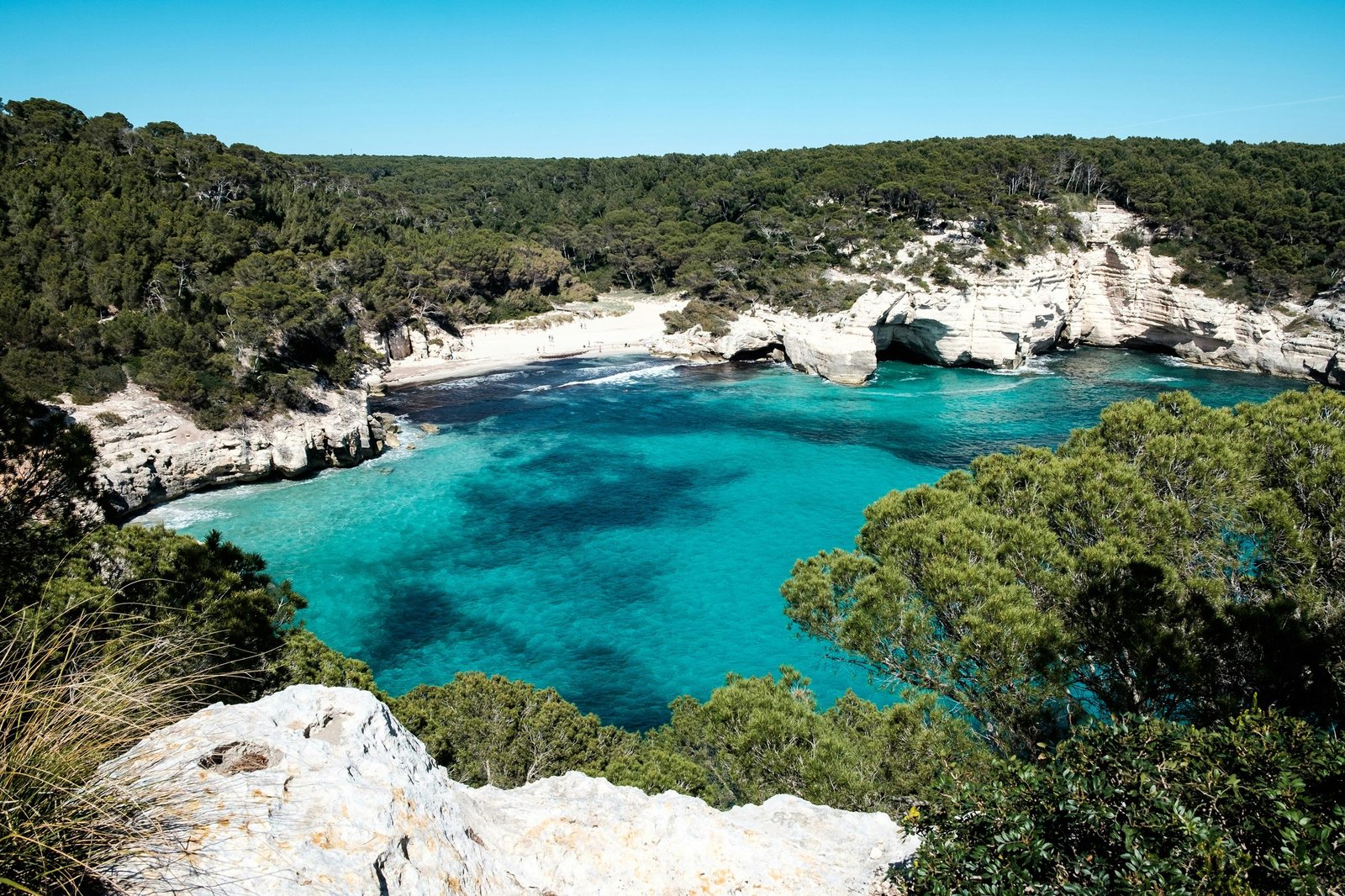
Choose the area before the hotel. In Menorca, it changes the trip substantially.
Ciutadella
The former capital: stone old town, narrow harbour, plaza terraces and the island’s western tilt. This is where evening light settles, and where Sant Joan takes over the streets.
Anyone who wants to walk at dusk, eat without driving, and stay close to the western coves (Macarella, Algaiarens, Cala en Blanes).
Keep in mind: In July–August and during Sant Joan the centre saturates. Parking inside the walls is punishment; choose a hotel with a space or arrive on foot.
Maó (Mahón)
The present capital and the way in. A hill town above the harbour, market life, offices, and the airport fifteen minutes away.
Travellers who land and want a practical base, city restaurants and easy exits toward the east and south (Binibeca, Punta Prima, Es Grau).
Keep in mind: Less immediately photogenic than Ciutadella at first glance; it rewards you if you stay to look down on the harbour and eat in town.
North: Cala Morell, Cavalleria and around
Rockier coast open to the tramontana, with reddish or golden beaches (Cavalleria, Pregonda) and small villages. The landscape is wilder than the south.
Walkers on the Camí de Cavalls, lighthouse people, and anyone who accepts that swimming here sometimes asks for more judgment than in the sheltered southern coves.
Keep in mind: Few services outside summer. A car is almost essential. Strong tramontana makes the water rough.
South: Binibeca, Cala en Porter and the sandstone coast
The most photographed strip: coves cut into low cliffs, whitewashed Binibeca Vell, and beach-bar life in season.
A first visit, easy swimming, and sunsets at places like Cova d'en Xoroi (Cala en Porter).
Keep in mind: Binibeca Vell is a 1970s tourist village, not an ancestral fishing town: go early or at dusk if you want the lanes without a queue. In August, parking near the famous coves is the day’s main plan.