
San Sebastián
EUSKADIDonostia2026

Calma guide · Gipuzkoa, Basque Country

San Sebastián

Donostia is for walking: La Concha, Urgull, Gros. You eat with a rhythm, not a bar crawl.

Reviewed · 10 min read

Share
Photo · Shery Arturova / Unsplash

Share this guide

When you send the link, a card shows the photo, the headline and calma.travel.

Why here

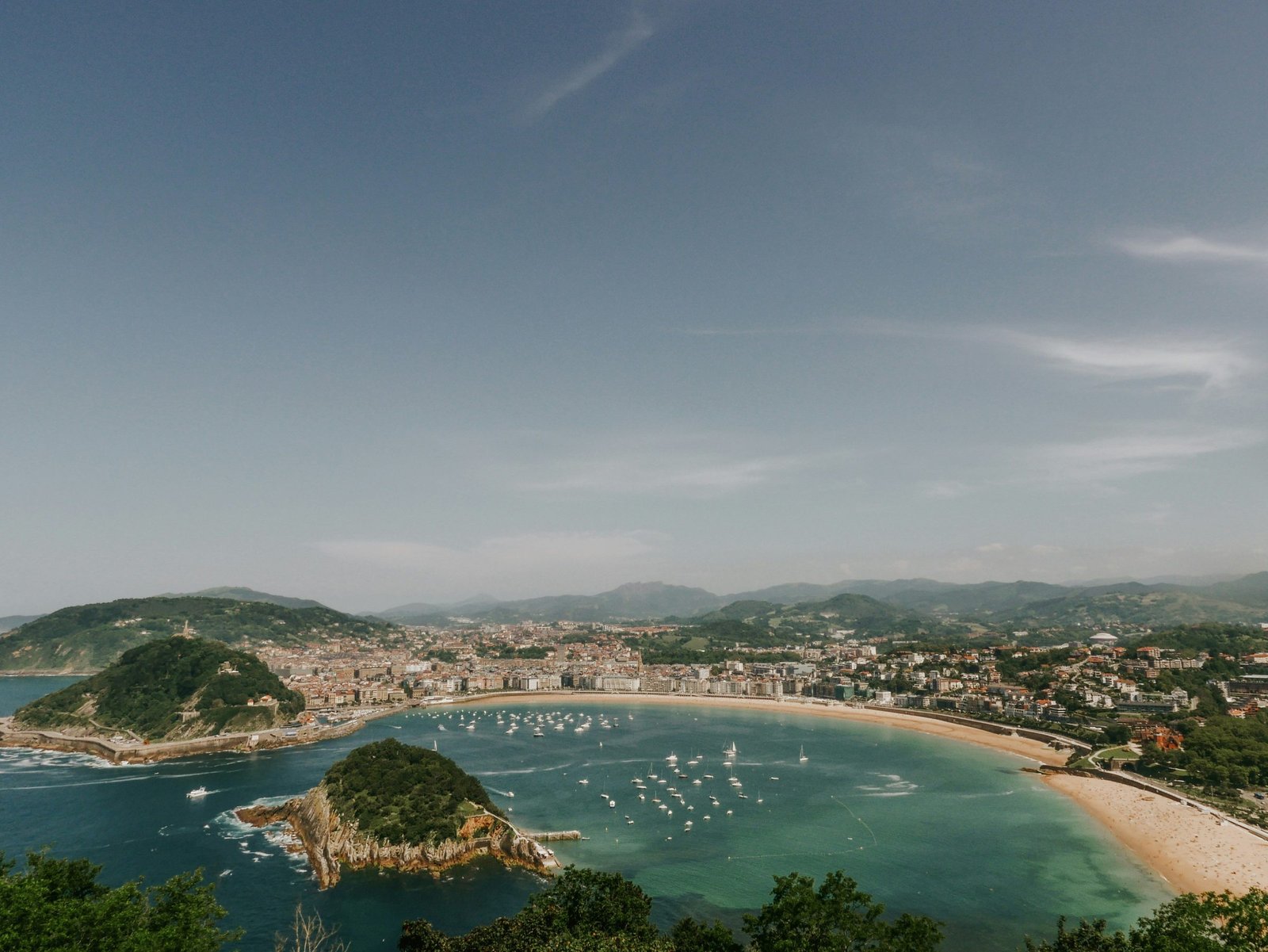
San Sebastián —Donostia in Basque— is an Atlantic city you understand on foot. La Concha bay draws a curve of sand between Mount Urgull and Antiguo; across the Urumea, Gros opens Zurriola beach to real surf. You do not need a twenty-bar itinerary. You need a rhythm: market in the morning, a lunch that lasts, a long walk at dusk, and if you feel like it, two pintxos in the Parte Vieja on the way home.

Weather runs the show more than the brochure. It rains many days a year —AEMET’s Igeldo station shows roughly 1,500–1,600 mm annually— and the Atlantic keeps summer cool. That does not spoil the trip; it shapes it. You walk with a light jacket, eat indoors when the sky closes, and take every run of light on the promenade. The city rewards people who leave space between a table and the next stretch of shore, not people who try to collect stars.

If you came to rank pintxos or chase Michelin tables back to back, this guide is not yours: food here sits inside a walk, not the other way round. It is also not a Mediterranean beach break: the water stays cold most of the year, Zurriola has serious swell, and La Concha packs out in August. If you hate rain, pick another month or another coast —November is Igeldo’s wettest month, and that is a pattern, not bad luck.

Language
Spanish and Basque
Currency
Euros (EUR)

When to go

May, June and the first half of September

Days lengthen, temperatures stay mild without August’s crush, and you can still walk La Concha without moving shoulder to shoulder. June is often among Igeldo’s less rainy months; September, outside the Film Festival, feels like a city again.

Early October, when rates ease and the promenade returns to people who live here —in exchange for more grey days. Or July if you accept mild Atlantic warmth and more people, but skip Semana Grande.

There is no Mediterranean dry season. Even June and July bring around 90–100 mm and about ten wet days. November leads (over 200 mm in Igeldo’s normals); October, December and January stay high. Atlantic rain often arrives in fronts: a full day of drizzle, a break, another pass. Bring a real waterproof, not a souvenir umbrella.

See the month-by-month calendar →

Season or eventWhenWhat it changes
Aste Nagusia / Semana GrandeAlways the week of 15 August, Saturday to Saturday. In 2026: 8–15 AugustFireworks, concerts, packed streets and hotel rates up. If you came to walk and eat at table pace, choose another week; if you came for the city’s festival, book months ahead.
San Sebastián Film FestivalLate September. In 2026: 18–26 SeptemberIndustry crowds, queues at the Kursaal and festival pricing. The promenade is still the promenade, but good tables go fast.
Easter and spring bridge holidaysMoves with the liturgical calendar and national holidaysStrong domestic tourism, especially when the weather cooperates. The Parte Vieja shows it; Gros and Antiguo hold up better.

San Sebastián airport (EAS) is small and sensitive to coastal wind and fog; many useful flights land in Bilbao (BIO) with about an hour by bus or car to finish. Treat the transfer as part of the day, not a footnote.

Where to stay

Where to stay in San Sebastián.

We're asking for rates for these dates.

If none quite fit, open search with your dates and the map.

Search more stays →

First, choose the neighborhood.

Choose the area before the hotel. In San Sebastián, it changes the trip substantially.

Parte Vieja (Alde Zaharra)

The old town between the harbour and Urgull: narrow streets, private gastronomic societies behind unmarked doors, and the density of bars that fills every photograph.

Anyone who wants to leave the hotel and already be inside the good noise —and accept that nights are loud.

Keep in mind: Most touristy and easiest to do badly: bar after bar with no real hunger. Two stops with judgement are enough. Summer weekends mean walking sideways.

Centro and the La Concha arc

The elegant grid facing the bay: the seafront promenade, Alderdi Eder, the main shopping streets and a city rhythm that does not live on pintxos alone.

Short stays: you step out onto the promenade, with hotels of every size and transport close by.

Keep in mind: In August the promenade is a river of people at sunny hours. Rooms facing La Concha earn the view and pay for street noise.

Gros

Across the Urumea, with Zurriola in front and neighbourhood life behind: bakeries, morning bars, surfers carrying wetsuits under one arm.

Anyone who wants to sleep outside the Parte Vieja circuit and still walk everywhere in twenty minutes.

Keep in mind: Zurriola is not a swimming pool: flags and current matter. The Kursaal marks the edge; toward Sagüés it turns more residential.

Antiguo and Ondarreta

The west end of the bay, toward the Comb of the Wind: more residential, with Ondarreta beach and the promenade’s end where Chillida’s iron meets the swell.

Quieter stays, families, or return visitors who no longer need to wake inside the old town.

Keep in mind: Thirty to forty minutes on foot along the promenade to the Parte Vieja —which is exactly the point— or a short city bus.

Where to eat

Where to eat in San Sebastián, and exactly what to order.

Reference prices per person, in Euros (EUR).

Coffee and the market, before the crowd tide rises

A Donostia breakfast is not a show: coffee, toast or pastry, and if you are early, the market still working.

La Bretxa Market

Parte Vieja / edge of Centro

The covered market beside the old town: fish, produce, prepared foods and the feel of a city that shops, not only visits.

What to order

Coffee near the market and something simple —anchovies, cheese, fruit— depending on what looks fresh. Then walk down to the harbour with the day already set.

The honest part: Not a glossy food hall. Go in the morning, on a weekday if you can, and look at the fish before you decide lunch. Sundays and holidays change the pulse: check hours the day before.

One long table, not a trail of scraps

In Donostia midday can still be the spine of the day. Book or arrive early; the lingering is part of the plan.

Casa Urola

Fermin Calbetón Street, Parte Vieja$$ · Menu or plates roughly 25–50 EUR per person, depending on what you order

Basque product cooking in the old town, with a bar and tables: the place where the day organises around a plate, not a hashtag.

What to order

Whatever the fish board says, or grilled meat if the day wants substance. Ask what came in that morning; judgement lives in the answer, not a fixed menu.

Official website

The honest part: Popular for a reason and it fills. Book a table; the bar handles improvisation better. We do not print fixed hours: check their site the day before.

Kaia / Kaipe (Getaria)

Getaria harbour, ~25 km west

Fish over coals facing Getaria’s harbour: the ritual of turbot or sea bream on the grill with the Cantabrian Sea a jump away. This is a full-day meal, not a bite.

What to order

Whole grilled fish to share, a simple salad and local txakoli. Let them tell you what is at its peak; the fire does the rest.

The honest part: Getaria is the day’s plan, not a note between two bars. Book, especially at weekends. Elkano, in the same village, is another tier of price and lead time: if you have no table, Kaia/Kaipe holds the same landscape of coals without turning the trip into a hunt.

Two Parte Vieja bars, on the way

Not a listicle. Two classic stops to understand the pintxo gesture without turning the night into a circuit.

Bar Néstor

Calle del Puerto (Portu Kalea), Parte Vieja

An old-school bar where the tortilla and the steak matter more than the décor. Little space, few things, plenty of people who know why they came.

What to order

The potato tortilla —they cook limited batches— or the chuletón to share if you are truly hungry. Bread and wine, nothing clever.

The honest part: Not a secret and not a theme park: if the tortilla has gone, it is gone. Ask when the next batch lands and do not build the whole night around one pan. Cash or card depending on the day; the room is small and the queue is part of the price.

La Cuchara de San Telmo

31 de Agosto Street, Parte Vieja

A bar of hot, kitchen-led pintxos —not only cold snacks on bread— a step from San Telmo Museum. Raciones ordered aloud, eaten standing or at high tables.

What to order

Cheek, foie or the risotto of the day if it is on; one or two portions per person is enough if you have been walking. Share and keep moving.

The honest part: It packs early in the evening. Go soon, order with restraint and do not stay to complete a menu bingo: the value is two well-made plates and walking out toward the harbour or Gros.

A pintxo is a bar gesture, not a sport. In the Parte Vieja, two or three stops with real hunger beat ten in a hurry. Gastronomic societies (txokos) are private: you enter by invitation, not by calling the front desk. Local txakoli, poured from a height, suits grilled fish better than an endless croqueta route.

What to do

6 plans, from half a day to a full day.

La Concha’s arc, early or late

The walk that defines the city: from the Parte Vieja toward Ondarreta along the sand curve, Santa Clara island in the middle. Mid-morning in August is a corridor; at dawn or when the light drops, it is a bay again. No ticket, no guide —just time and a jacket for the wind.

One to two hoursIn town

Climb Urgull

The green hill that closes the bay on the east. Walk up from the Parte Vieja through trees to the Mota castle and the view over La Concha and Zurriola. Antidote to the narrow street: height, eucalyptus air, the city all at once.

A morning or late afternoonIn town

Gros and Zurriola, out and back across the bridge

Crossing the Urumea into Gros changes the tone: more neighbourhood, more open-sea wind, the Kursaal as a modern landmark. Walk to Sagüés, watch the swell, walk back. Red flag means you watch the sea from afar.

An afternoonIn town

Out to the Comb of the Wind

At the end of Ondarreta, Eduardo Chillida’s sculptures set into the rock. Reach them on foot along the promenade from Centro or Antiguo; the show is water hitting iron when the swell is up. No ritual beyond arriving and staying a while.

A mid-afternoon, out and back on the promenadeIn town

A day in Getaria: coals and a fishing town

Half an hour west along the coast: Getaria, Elcano’s birthplace, with a harbour, txakoli on the slopes and fish grills in sight of the Cantabrian Sea. Bus or car out, an unhurried lunch, return in late light along the same cornice. The only plan in this guide that asks you to leave the city —and it earns that.

A full dayTransportation needed

A morning at San Telmo Museum or the harbour

When an Atlantic front shuts the day, San Telmo (convent and city museum) gives context without killing the morning. Covered alternative: the harbour and aquarium in the same basin, useful with children or horizontal rain. Neither replaces the walk; they accompany a grey day.

Two to three hoursIn town

Getting around

Airport into town

EAS (San Sebastián) sits in Hondarribia, about twenty minutes by taxi or bus from Donostia. BIO (Bilbao) is roughly 100 km out: direct Pesa/Alsa bus to San Sebastián station in about an hour, or a hire car. Biarritz (BIQ) works when the flight fits, with an international transfer and more border friction.

On foot and on dbus

Centro, the Parte Vieja, Gros and the La Concha arc out to Ondarreta are walkable. City buses (dbus) cover hills and wet days; a card or in-app payment beats hunting coins. Taxis and ride apps work; in summer rush hour the promenade on foot is still more predictable than a car hunting a space.

To Getaria and the Gipuzkoa coast

Interurban buses from San Sebastián station toward Getaria/Zumaia, or a car if you want viewpoint stops. You do not need a hire car for the city alone; it pays off if you string coastal towns into one day.

Worth knowing

It really rains, and that is not bad luck.

AEMET normals at Igeldo run about 1,500–1,600 mm a year, with November on top. A four-day October trip can include two grey days without the forecast “failing”: that is oceanic climate. Plan B is not cancelling; it is a museum, a long lunch and a walk in a shell jacket.

Basque is on the street signs; Spanish is enough to get around.

Donostia is bilingual. Official names run in both languages. Spanish works in bars and hotels; a “kaixo” and “eskerrik asko” never hurt and are not required to get the bill.

The Parte Vieja at night is not all of San Sebastián.

It is the densest strip and the most photographed. Gros and Antiguo wind down earlier and sleep better. If your hotel is in the old town, expect street talk late Thursday through Saturday.

Book the serious table, then improvise the bar — in that order.

For a sit-down lunch or Getaria, yes. For pintxos, no —but “no reservation” does not mean “show up at nine in August and expect a miracle”. Go early, accept a full doorway, cross the street.

The water is cold; the bay is not the Mediterranean.

Yes — with a wetsuit outside high summer if you chill easily, and with respect for flags and swimming zones. Zurriola is a surf beach; La Concha and Ondarreta are more sheltered. None of them promise warm Mediterranean water.

Sunday and Monday change the pulse of the bars.

Many close one weekday or open late on Sunday. We do not print a universal calendar because it rotates: the practical rule is read the door and keep a backup two streets away. The market and Gros bakeries save thin mornings.

If you only have three days

The shortest itinerary that works.

01

Coffee and a look through La Bretxa Market in the morning. Climb Urgull while legs are fresh and sit down for lunch —Casa Urola or another booked table in the old town—. At dusk, walk La Concha toward Antiguo without reaching the Comb yet. At night, tortilla at Néstor if a batch is on, one hot ración at La Cuchara, then sleep without a third street of bars.

02

Getaria day: bus or car along the coast, fish over coals in the harbour, txakoli if you want it, return in the light. If the sea is impossible or the booking falls through, flip the day: Gros and Zurriola in the morning, San Telmo in the rain, Comb of the Wind at the end when the swell does Chillida’s work.

03

A slow Gros morning —bread, coffee, Cantabrian Sea— and walk across the bridge into the Parte Vieja. Buy something from the market or a serious tin shop to take home. Last walk out to the Comb of the Wind and back via Ondarreta. Early dinner and a suitcase: the city makes more sense when you do not try to empty it.

Plan your escape

Ready to go to San Sebastián?

The selection above is the starting point. For other dates or more options, search and weekend flights are one click away.

No hotel pays to be on Calma

How we choose →